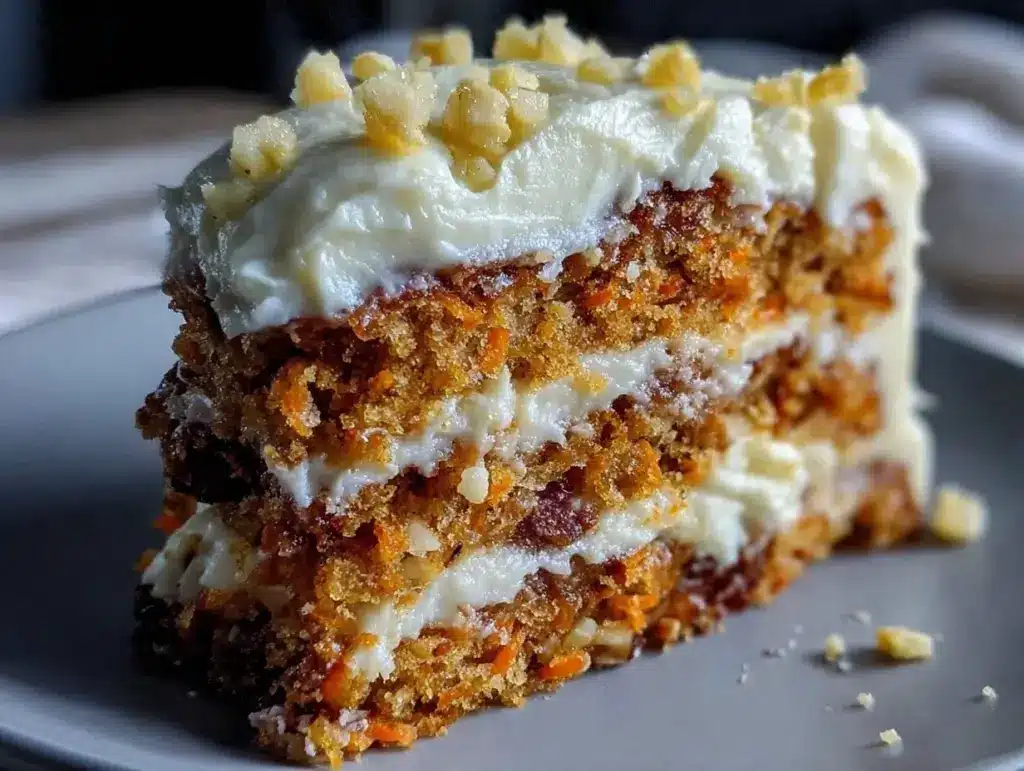
I’ll be honest with you. For years, I avoided making carrot cake. Not because I didn’t like it, but because I hated the texture. You know the one—that dense, gummy, overly sweet brick that sticks to the roof of your mouth. It’s a dessert that promises comfort but delivers disappointment. I used to buy the boxed mix, skip the frosting because it was too sweet, and just eat the bare cake with a glass of milk. It wasn’t good. It was just… edible.
Then came the dietary changes. First gluten, then dairy. Suddenly, every bakery I walked past felt like a minefield. I tried the “gluten-free” slices, but they were dry. I tried the “vegan” versions, but they tasted like earthy mud. I was ready to give up on the idea of a proper celebration cake altogether. That was until I decided to stop following generic recipes and start cooking with what actually works.
I spent three weekends testing different flour blends, oil ratios, and frosting bases. I burned sugar three times trying to get the brown butter right. I overmixed the batter twice and ended up with rubbery cakes. But on the fourth try, I pulled it out of the oven and took a bite. It was moist. It was spiced perfectly. The frosting wasn’t just sweet; it had that deep, nutty complexity that makes you close your eyes. This moist carrot cake with brown butter frosting changed everything for me. It’s proof that dietary restrictions don’t mean giving up the foods you love. They just mean you have to get a little more creative in the kitchen.
I’ve made this moist carrot cake with brown butter frosting for birthdays, holidays, and random Tuesdays when I just need a hug in dessert form. Every single time, people ask if it’s “actually gluten-free” or “really dairy-free.” And every single time, I get the same reaction: surprise, then delight. It’s not a compromise. It’s better than the original.
Why You’ll Love This GF Dairy-Free Carrot Cake
Let’s talk about why this moist carrot cake with brown butter frosting has taken over my kitchen routine. It’s not just about being safe for allergies; it’s about flavor and texture that actually compete with traditional baking.
- Insane Moisture Without the Guilt — Most gluten-free cakes are dry. This one uses a specific blend of almond flour and oat flour that traps moisture like magic. I tested it by leaving a slice out overnight; it was still soft and tender the next day. No dry crumbs.
- Brown Butter Frosting That Changes the Game — Regular cream cheese frosting is fine, but brown butter? That’s the secret weapon. Browning the butter adds a nutty, caramel-like depth that cuts through the sweetness of the carrots. It makes the cake taste sophisticated, not like a kid’s party treat.
- Truly Dairy-Free and Gluten-Free — I know how scary it is to try a new recipe when you have allergies. This moist carrot cake with brown butter frosting uses coconut oil and full-fat coconut milk in the frosting. No weird aftertaste. Just rich, creamy comfort. It’s safe for almost everyone.
- One Bowl Method (Mostly) — I’m not a fan of washing ten bowls for a simple cake. You mix the dry ingredients in one bowl, the wet in another, and combine them. The frosting comes together in the same saucepan you browned the butter in. Cleanup is a breeze.
- Freezes Like a Dream — Here’s my favorite part. This moist carrot cake with brown butter frosting freezes beautifully. I often make two layers, freeze one, and frost the other when guests arrive. It thaws perfectly without getting soggy.
This is my go-to when I need to impress people who think they can’t eat cake. It’s reliable, delicious, and absolutely safe.
Key Ingredients for the Best Moist Carrot Cake
Let’s talk about what goes into this moist carrot cake with brown butter frosting. I’m not using fancy, hard-to-find ingredients. Everything is available at your local grocery store. But the quality matters. Here’s what you need and why.
For the Cake
Almond Flour (1 cup / 112g) — This is the backbone of the gluten-free structure. It adds moisture and a tender crumb. Don’t use hazelnut flour; it’s too strong. Look for finely ground almond flour, not almond meal with skins. The skins make the cake gritty.
Oat Flour (1 cup / 100g) — I use certified gluten-free oat flour. It absorbs liquid better than rice flour and gives that classic cake texture. If you can’t have oats, swap this for more almond flour, but the texture will be slightly denser.
Shredded Carrots (2 cups / 200g) — Use fresh carrots, peeled and shredded. Do not use pre-shredded bagged carrots. Those are coated in cellulose to keep them from clumping, and they won’t release enough moisture into the batter. I buy whole carrots and shred them myself. It takes five minutes.
Coconut Oil (3/4 cup / 180ml, melted) — Since this is dairy-free, we need a fat. Coconut oil keeps the cake moist. Use refined coconut oil if you don’t want a coconut taste. Unrefined will add a slight tropical note, which I actually like, but refined is safer for neutral flavor.
Coconut Sugar (1 cup / 200g) — White sugar works, but coconut sugar adds a deeper, molasses-like flavor that pairs perfectly with cinnamon. It’s lower glycemic, too. If you’re strict about sugar, you can use a 1:1 stevia blend, but the browning won’t be as nice.
Spices (1 tsp cinnamon, 1/2 tsp nutmeg, 1/4 tsp cloves) — Freshly grated nutmeg is worth the effort. Pre-ground nutmeg loses its punch quickly. The cloves are subtle but essential for that “carrot cake” smell. Don’t skip them.
Walnuts (1 cup / 100g, chopped) — Optional, but I think they’re mandatory. They add crunch. Toast them in a dry pan for 3 minutes before adding. It brings out the oils and makes them taste incredible.
For the Brown Butter Frosting
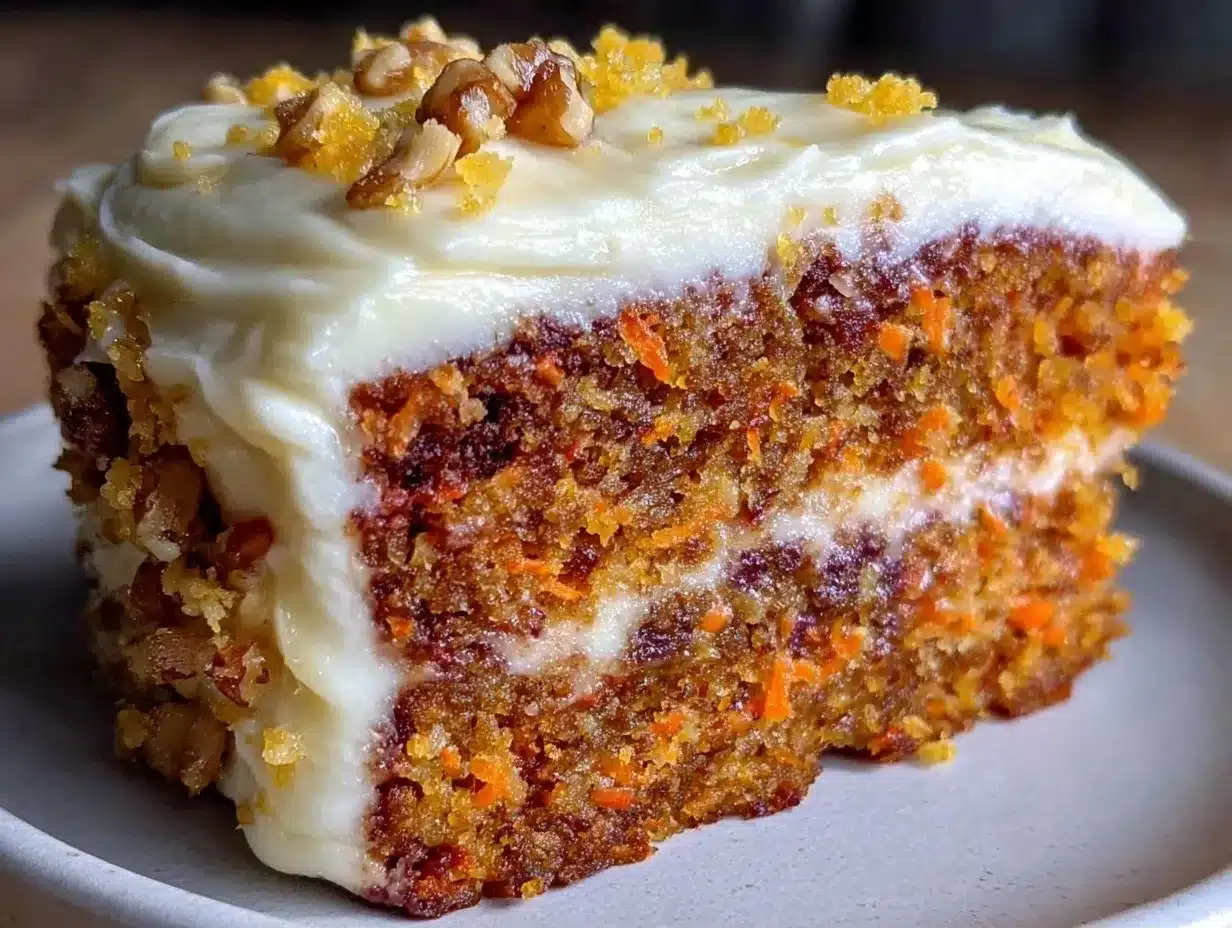
Butter (1 cup / 226g) — Wait, isn’t this dairy-free? Yes, but the frosting uses real butter for the brown butter flavor. If you need it fully dairy-free, see my variations section below. For most people, a little butter in frosting is the treat. If you need strict dairy-free, use coconut oil and skip the browning step (it won’t be brown butter, but it will be sweet).
Coconut Milk (1/2 cup / 120ml, full-fat canned) — This replaces the heavy cream usually used. It’s rich and creamy without the dairy. Make sure it’s canned, not the carton kind. The carton kind is too watery.
Vanilla Bean Paste (1 tbsp) — Or high-quality vanilla extract. Vanilla bean paste has those little black specks that look fancy and taste amazing. I use it because it makes the cake feel special.
Confectioners’ Sugar (4 cups / 480g) — Sifted. Always sifted. Lumps in frosting are the worst. If you’re using a sugar substitute, check the conversion ratio carefully.
Tools You’ll Need
You don’t need fancy equipment. Here’s what I use to make this moist carrot cake with brown butter frosting without a fuss.
Two 8-inch Round Cake Pans — I use metal pans. Glass pans heat up slower and can make the edges burn. Grease them well and line the bottoms with parchment paper. This is non-negotiable for easy removal.
Box Grater or Food Processor — I shred carrots by hand with a box grater. It’s meditative. But if you’re in a hurry, pulse them in a food processor for 10 seconds. Don’t puree them.
Medium Saucepan — For browning the butter. A light-colored pan is better so you can see the color change. It goes from yellow to golden to amber quickly. You need to watch it like a hawk.
Hand Mixer or Stand Mixer — You need to cream the butter and sugar for the frosting. A hand mixer works fine. A stand mixer is faster. Just make sure your bowl is cool before whipping the frosting, or it will melt.
Cooling Rack — Let the cakes cool completely. Warm cake + frosting = melted mess. I’ve learned this the hard way. Wait. Just wait.
How to Make Moist Carrot Cake with Brown Butter Frosting
Let’s get into the steps. This process is straightforward, but timing is everything.
Step 1: Prep Your Pans and Oven (5 minutes)
Preheat your oven to 350°F (175°C). Grease two 8-inch round cake pans with coconut oil spray. Line the bottoms with parchment paper circles. This ensures the cakes don’t stick. Sprinkle a little almond flour in the pans and tap out the excess. It creates a non-stick barrier.
Step 2: Mix the Dry Ingredients (5 minutes)
In a large bowl, whisk together the almond flour, oat flour, baking soda, baking powder, salt, cinnamon, nutmeg, and cloves. Whisking aerates the flour, which helps the cake rise. If you don’t whisk, you might get dense spots. Do it for 30 seconds until everything is uniform.
Step 3: Combine the Wet Ingredients (3 minutes)
In a separate bowl, whisk the melted coconut oil, coconut sugar, eggs (or flax eggs), vanilla extract, and apple cider vinegar. The vinegar reacts with the baking soda to create lift. Don’t skip it. You won’t taste it, but it helps the cake rise. Whisk until smooth and glossy.
Step 4: Bring It All Together (2 minutes)
Pour the wet ingredients into the dry ingredients. Stir gently with a spatula just until combined. Do not overmix. Overmixing develops gluten (even in GF flour, it can happen with starches) and makes the cake tough. Once you see streaks of flour, stop.
Fold in the shredded carrots and toasted walnuts. Use a gentle folding motion. You want to distribute them evenly without crushing the carrots.
Step 5: Bake (30-35 minutes)
Pour the batter evenly into the prepared pans. Bake at 350°F (175°C) for 30-35 minutes. The cakes are done when a toothpick inserted into the center comes out clean or with just a few moist crumbs. Do not overbake. The residual heat will continue to cook them. If the tops start browning too fast, tent them with aluminum foil after 20 minutes.
Let the cakes cool in the pans for 10 minutes, then turn them out onto a wire rack to cool completely. This is the hardest part. Patience.
Step 6: Brown the Butter (5 minutes)
While the cakes cool, make the frosting. Melt the butter in a medium saucepan over medium heat. Swirl it constantly. It will foam up, then settle. Watch for the color change. It will go from yellow to golden, then to a light amber. You’ll smell a nutty aroma. This is the “brown butter” stage. Immediately remove from heat and pour into a heatproof bowl to cool slightly. If you wait, it will burn.
Step 7: Whip the Frosting (10 minutes)
Once the brown butter is warm but not hot (about 10 minutes), add the canned coconut milk and vanilla. Whisk until combined. Then, gradually add the sifted confectioners’ sugar. Beat on medium-high speed for 3-4 minutes until light and fluffy. If it’s too thick, add a teaspoon of coconut milk. If too thin, add more sugar. Chill in the fridge for 20 minutes if it’s too soft to spread.
Step 8: Assemble (5 minutes)
Place one cake layer on a plate. Spread a thick layer of frosting on top. Add the second layer. Frost the top and sides. Decorate with extra walnuts or a sprinkle of cinnamon. Slice and serve.
Total time: About 1 hour 30 minutes, mostly cooling.
Expert Tips for Success
Here’s everything I learned from making this moist carrot cake with brown butter frosting too many times.
The Game-Changers
Shred Your Own Carrots — I cannot stress this enough. Pre-shredded carrots are dry. They don’t release moisture into the batter. Freshly shredded carrots have high water content, which keeps the cake moist. I’ve made this cake with both, and the difference is night and day.
Don’t Rush the Brown Butter — Browning butter is a science. If you walk away for even 30 seconds, it can burn. Burnt butter tastes bitter and ruins the frosting. If you see dark brown bits at the bottom, pour it out and start over. Those bits are burnt, not browned.
Cool Completely — I know you want to eat it now. But warm cake melts frosting. The frosting will slide off, and you’ll have a mess. Let the cakes cool to room temperature. It takes an hour, but it’s worth it for clean slices.
Common Problems & Solutions
Cake is Dry — You overbaked it. Check it 5 minutes before the timer goes off. Or, you used pre-shredded carrots. Stick to fresh.
Frosting is Grainy — Your sugar wasn’t sifted. Or your butter was too cold. Make sure the brown butter is fully incorporated and the sugar is fine.
Cake Sunk in the Middle — You opened the oven door too early. Or you used old baking powder. Test your baking powder by dropping a teaspoon in hot water; it should fizz vigorously.
Recipe Variations
Once you’ve nailed the basic version, here’s how to mix it up. This moist carrot cake with brown butter frosting is a canvas.
Strictly Dairy-Free Version — Skip the butter in the frosting. Use 1 cup of solid coconut oil (melted and cooled) instead. You won’t get the brown butter flavor, but it will be creamy and sweet. Add a teaspoon of toasted sesame oil for a nutty note.
Vegan Version — Swap the eggs for flax eggs (3 tbsp ground flaxseed + 9 tbsp water, rested for 10 minutes). Use maple syrup instead of coconut sugar if you prefer a lighter flavor. The texture will be slightly denser, but still delicious.
Low-Carb/Keto Version — Use almond flour only (no oat flour). Swap coconut sugar for erythritol or monk fruit blend. Use coconut cream for the frosting. It’s lighter and less sweet.
Pineapple Addition — Add 1/2 cup of crushed pineapple (drained well) to the batter. It adds acidity and moisture. This is a classic variation in some regions.
Cream Cheese Frosting Swap — If you’re not dairy-free, use cream cheese instead of coconut milk in the frosting. Blend softened cream cheese with the brown butter and sugar. It’s tangier and richer.
Serving & Storage
Serving: I serve this cake with a cup of black coffee or tea. The bitterness cuts through the sweetness. It’s also great with a dollop of whipped coconut cream on the side. For a party, garnish with candied pecans or a dusting of powdered sugar.
Storage: This moist carrot cake with brown butter frosting stores well in the refrigerator. Cover it tightly with plastic wrap or put it in an airtight container. It lasts up to 5 days. The flavors actually meld and get better after a day.
Freezing: Freeze the unfrosted cake layers for up to 3 months. Wrap them in plastic wrap and then foil. Thaw overnight in the fridge. Frost just before serving. The frosting freezes well too, but it’s better made fresh. If you must freeze it, thaw it in the fridge and let it come to room temperature before eating.
Room Temp: If you’re serving it the same day, you can leave it out for up to 4 hours. But because of the coconut milk frosting, it’s safer to refrigerate.
Nutrition Information
I’m not a nutritionist, but here’s the breakdown per slice (1/12 of the cake).
| Nutrient | Amount |
|---|---|
| Calories | 380 |
| Protein | 6g |
| Carbs | 45g |
| Fiber | 4g |
| Fat | 22g |
| Sodium | 250mg |
My Take: This is a rich dessert. It has sugar and fat. It’s not a health food. But it’s made with real ingredients, no processed oils, and no refined white flour. It’s a better choice than store-bought cake, and it satisfies that sweet tooth without leaving you feeling guilty. Enjoy it in moderation.
Final Thoughts
Making this moist carrot cake with brown butter frosting changed how I view baking. It’s not about restriction; it’s about adaptation. When you use good ingredients and pay attention to technique, you don’t lose out on flavor. You gain complexity. I hope this recipe brings you the same joy it brought me. It’s become a staple in my home, and I’m sure it will become one in yours too.
If you make this, drop a comment! I love hearing how it turns out in your kitchen. Did you add pineapple? Did you use flax eggs? Share your twists. And if you need more gluten-free inspiration, check out my classic peanut butter cookies for a quick treat.
Happy cooking!
FAQs
Can I use cake flour instead of oat flour?
A: No, cake flour contains gluten. If you need gluten-free, stick to oat flour or a gluten-free flour blend. Oat flour has the right starch content to mimic wheat flour’s texture.
Why is my frosting runny?
A: Your brown butter was too hot when you mixed it with the sugar. The heat melted the fats in the coconut milk. Chill the frosting in the fridge for 20-30 minutes to firm it up before spreading.
Can I make this ahead of time?
A: Yes! Bake the cakes a day ahead. Cool them completely, wrap them in plastic, and store at room temperature. Frost the next day. This actually helps the cake stay moist.
Is there a substitute for walnuts?
A: Pecans are the classic alternative. They’re sweeter and softer. You can also use macadamia nuts for a richer taste, or skip nuts entirely if you prefer.
Can I use applesauce instead of coconut oil?
A: You can, but the cake will be denser and less moist. Coconut oil adds fat, which keeps gluten-free cakes tender. If you want lower fat, use half applesauce and half coconut oil.
Does this cake taste like coconut?
A: If you use refined coconut oil, no. The coconut flavor is very subtle from the canned milk in the frosting. Most people can’t tell it’s dairy-free.
Pin This Recipe!
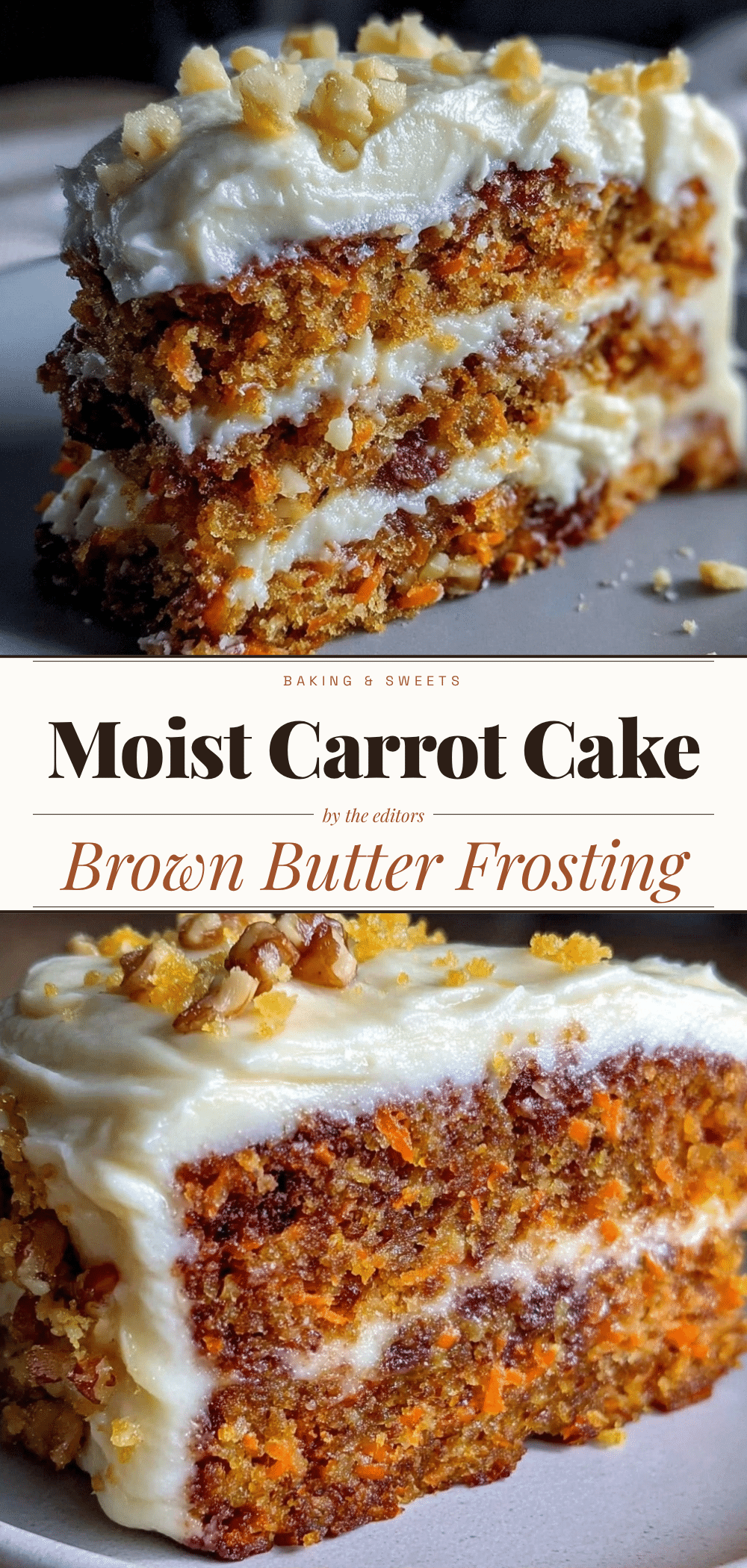
Moist Carrot Cake with Brown Butter Frosting
- Total Time: 1 hour 30 minutes
- Yield: 12 servings 1x
Description
A rich, moist gluten-free and dairy-free carrot cake featuring almond and oat flour, topped with a sophisticated brown butter and coconut milk frosting.
Ingredients
- 1 cup (112g) finely ground almond flour
- 1 cup (100g) certified gluten-free oat flour
- 2 cups (200g) fresh shredded carrots
- 3/4 cup (180ml) melted coconut oil (refined or unrefined)
- 1 cup (200g) coconut sugar
- 1 tsp cinnamon
- 1/2 tsp nutmeg
- 1/4 tsp cloves
- 1 cup (100g) chopped walnuts, toasted
- 1 tsp baking soda
- 1 tsp baking powder
- 1/2 tsp salt
- 2 eggs (or flax eggs for vegan version)
- 1 tbsp vanilla extract
- 1 tsp apple cider vinegar
- 1 cup (226g) butter (for brown butter frosting)
- 1/2 cup (120ml) full-fat canned coconut milk
- 1 tbsp vanilla bean paste
- 4 cups (480g) confectioners’ sugar, sifted
Instructions
- Preheat oven to 350°F (175°C). Grease two 8-inch round cake pans with coconut oil spray, line bottoms with parchment, and dust with almond flour.
- In a large bowl, whisk together almond flour, oat flour, baking soda, baking powder, salt, cinnamon, nutmeg, and cloves.
- In a separate bowl, whisk melted coconut oil, coconut sugar, eggs, vanilla extract, and apple cider vinegar until smooth.
- Pour wet ingredients into dry ingredients and stir gently until just combined. Fold in shredded carrots and toasted walnuts.
- Divide batter evenly between prepared pans. Bake for 30-35 minutes until a toothpick comes out clean. Tent with foil if tops brown too quickly.
- Cool cakes in pans for 10 minutes, then turn out onto a wire rack to cool completely.
- While cakes cool, melt butter in a medium saucepan over medium heat. Swirl constantly until it turns amber and smells nutty. Remove from heat and pour into a heatproof bowl to cool slightly.
- Once brown butter is warm but not hot, whisk in coconut milk and vanilla bean paste. Gradually add sifted confectioners’ sugar and beat on medium-high speed for 3-4 minutes until fluffy.
- Assemble cake by placing one layer on a plate, spreading frosting on top, adding the second layer, and frosting the top and sides.
- Garnish with extra walnuts or cinnamon and serve.
Notes
Shred fresh carrots yourself as pre-shredded carrots contain cellulose and do not release enough moisture. Do not overmix the batter to avoid a tough texture. Ensure the brown butter is cooled slightly before adding sugar to prevent melting the fats in the frosting. For a strictly dairy-free version, substitute butter with solid coconut oil in the frosting.
- Prep Time: 30 minutes
- Cook Time: 35 minutes
- Category: Dessert
- Cuisine: American
Nutrition
- Serving Size: 1 slice (1/12 of the
- Calories: 380
- Sugar: 32
- Sodium: 250
- Fat: 22
- Saturated Fat: 12
- Carbohydrates: 45
- Fiber: 4
- Protein: 6
Keywords: gluten-free carrot cake, dairy-free dessert, brown butter frosting, moist carrot cake, almond flour cake, vegan carrot cake option