Three years ago, I was standing in my kitchen at 6:45 PM on a Tuesday, staring into the open refrigerator like it held the secrets to the universe. It didn’t. It held a sad container of leftover takeout sauce, three wilting scallions, and a single, lonely lemon that had seen better days. My husband was coming home from work, the kids were arguing over who got the bigger iPad screen, and I was exhausted. The mental load of deciding what to cook, chopping vegetables, and cleaning up afterward felt like carrying a boulder up a hill.
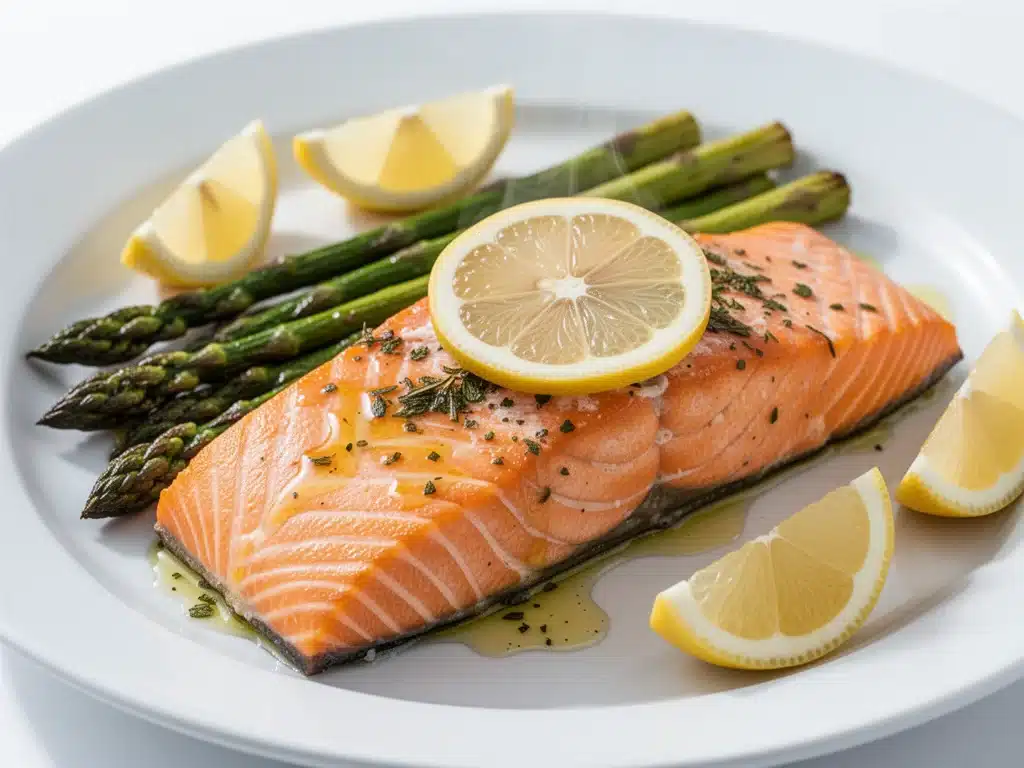
I ordered pizza. Again. It wasn’t the first time that week, and honestly, it probably wouldn’t have been the last if I hadn’t stumbled onto a simple solution. I grabbed a frozen salmon fillet I’d forgotten to defrost, threw some asparagus on the counter, and decided to stop overthinking it. I put them both on one sheet pan, drizzled them with olive oil, lemon, and garlic, and hit bake.
Twenty minutes later, the house smelled like a spa, not a grease trap. The kids actually ate their vegetables. My husband asked for seconds. And I realized something important: healthy dinner didn’t have to mean hours of prep, complicated techniques, or eating bland, sad food. It just meant making smarter choices with the right tools.
That random Tuesday birthed my obsession with one-pan salmon dinners. This Healthy Baked Salmon with Roasted Asparagus is the result of that night. It’s my go-to when I’m tired, when I want to feel nourished, and when I need to get dinner on the table before the world falls apart. It’s not just a recipe; it’s my peace of mind. And after making it dozens of times for my family, I’ve fine-tuned it until it’s foolproof.
If you’re someone who loves seafood but hates the cleanup, or if you’re trying to eat cleaner without spending hours in the kitchen, this dish is for you. It’s elegant enough for guests but simple enough for a random Tuesday. Let me show you how to make it.
Why You’ll Love This One-Pan Salmon Dinner
I’ve tried a lot of “healthy” weeknight recipes. Some are too complicated, some taste like cardboard, and some require ingredients I have to drive to a specialty store to find. This Healthy Baked Salmon with Roasted Asparagus fixes all of that. Here’s why it has earned a permanent spot in my rotation:
- Zero Stress Cleanup — Seriously, one sheet pan. That’s it. I don’t have to wash a dozen bowls, chop boards, and pots. Just toss the pan in the sink and let it soak. This alone is worth the recipe. I’ve made this while holding a toddler and still managed to have a clean kitchen by bedtime.
- Under 30 Minutes Total — From fridge to fork is about 25 minutes. The salmon bakes in 12-15 minutes, and the asparagus takes about the same time. It’s faster than waiting for a pizza delivery driver, and it’s infinitely healthier. Perfect for those nights when you get home late and just want to eat.
- Restaurant-Quality Taste at Home — The combination of lemon, garlic, and dill with high-quality salmon is just unbeatable. It tastes like something you’d order at a nice bistro, but it costs a fraction of the price. My kids think it’s “fancy food,” which makes them eat it without complaint.
- Actually Healthy — No heavy creams, no breading, no frying. Just omega-3 rich salmon and fiber-packed asparagus. It’s light on the stomach but filling enough to keep you satisfied until breakfast. I feel energized after eating this, not sluggish.
- Flexible and Forgiving — Forgot fresh dill? Use dried. Asparagus is too thick? Trim it. Salmon is frozen? Thaw it under cold water for 10 minutes. This recipe bends to your reality, not the other way around.
Real talk: life is busy. You don’t have time for perfection. You need dinner to work. This Healthy Baked Salmon with Roasted Asparagus just works. It’s reliable, delicious, and makes you feel like a good parent/partner/self-care enthusiast, all in one meal.
Ingredients You’ll Need
Here’s the best part: you probably have most of this already. I’m not asking you to buy exotic spices or obscure oils. This is about using simple, high-quality ingredients that do the heavy lifting.
For the Salmon
Salmon Fillets (4 pieces, about 6 oz each / 170g each) — I always buy wild-caught Alaskan salmon if I can find it. It has a firmer texture and a cleaner taste than farmed. Look for fillets that are uniform in thickness so they cook evenly. If they’re super thick, ask the fishmonger to trim them.
Olive Oil (2 tablespoons / 30ml) — Use extra virgin for the best flavor. It’s healthy, it’s delicious, and it helps the spices stick. Don’t skimp on quality here; it’s the base of the sauce.
Lemon (1 large, juiced and zested) — Fresh lemon juice is non-negotiable. It cuts through the richness of the salmon. The zest adds that bright aroma that makes the whole kitchen smell amazing. Pre-bottled lemon juice tastes flat and bitter in this dish.
Garlic (3 cloves, minced / about 1 tablespoon) — Fresh garlic only. Jarred garlic has a metallic aftertaste that clashes with the delicate fish. Minced fine so it distributes evenly. If you’re lazy, buy pre-peeled cloves, but mince them yourself.
Dried Dill (1 teaspoon) — Dill and salmon are a classic pairing for a reason. It adds that fresh, grassy note. Fresh dill works too (use 1 tablespoon chopped), but dried is more convenient for weeknights.
Red Pepper Flakes (¼ teaspoon, optional) — Just a pinch. It doesn’t make it spicy; it just adds a subtle warmth that balances the lemon. Skip it if you’re feeding kids who are sensitive to spice.
Salt and Black Pepper (to taste) — Kosher salt is best because it’s easier to control. Use about ½ teaspoon per fillet. Freshly cracked black pepper adds a nice bite.
For the Asparagus
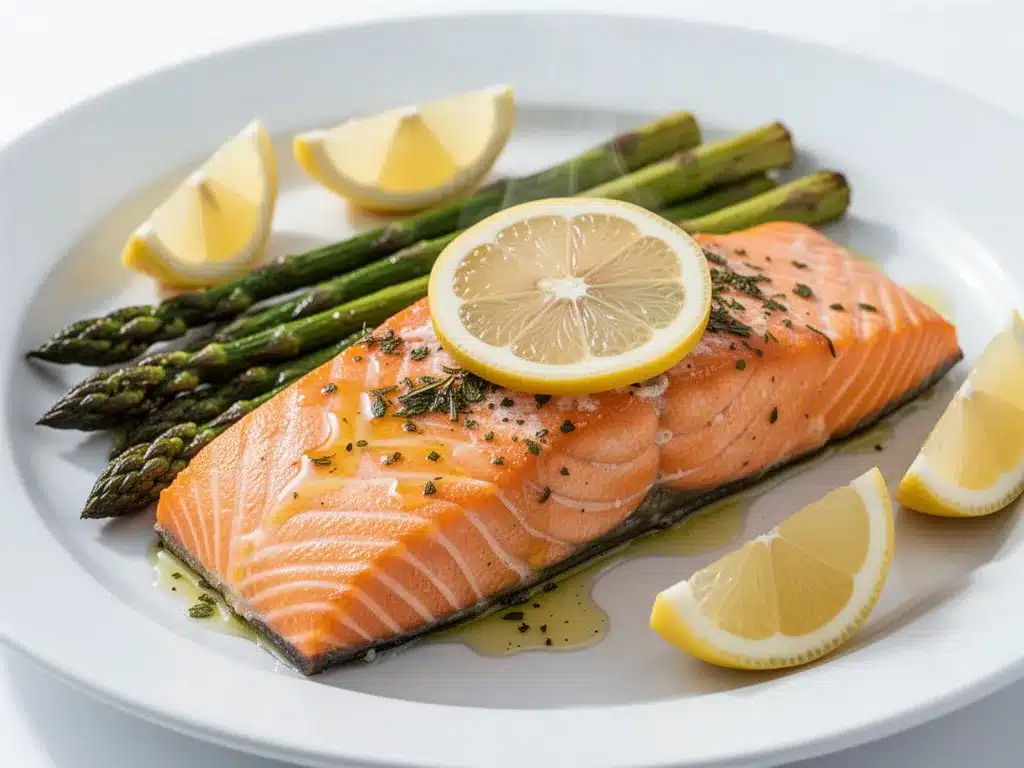
Asparagus Spears (1 bunch, about 1 pound / 450g) — Look for spears that are bright green and firm. Avoid ones that are woody or yellowing. Thick spears are more filling; thin spears cook faster. I prefer medium-thick for this recipe.
Garlic Powder (½ teaspoon) — Adds a deeper garlic flavor to the asparagus without burning like fresh garlic might. It’s a quick flavor booster.
Parmesan Cheese (2 tablespoons, grated / optional) — I like sprinkling this on the asparagus before roasting. It gets crispy and nutty. If you’re dairy-free, skip it or use nutritional yeast.
Equipment You’ll Need
You don’t need fancy gadgets for this. Here’s what I actually use:
Large Sheet Pan — I use a half-sheet pan (18×13 inches). It needs to be big enough to fit the salmon and asparagus in a single layer. Crowding the pan steams the food instead of roasting it, and we want crispy edges, not soggy middles. My old, dented pan works just fine.
Parchment Paper or Silicone Mat — I line my pan with parchment for easy cleanup. It’s a game-changer. If you hate waste, a silicone baking mat is a great reusable alternative. Either way, it prevents sticking and saves you scrubbing.
Small Bowl — For mixing the olive oil, lemon, garlic, and herbs. Any small bowl works.
Sharp Knife and Cutting Board — For trimming the asparagus. A serrated knife can help if the stems are tough.
Tongs — For flipping the salmon gently. Tongs give you better control than a spatula.
How to Make It: Step-by-Step
Alright, let’s make this! I’m walking you through exactly how I do it, including the little tricks I’ve picked up over the years.
Step 1: Prep Your Oven and Pan (5 minutes)
Preheat your oven to 400°F (200°C). While it heats, line your sheet pan with parchment paper. This is the most important step for easy cleanup. Trust me, you’ll thank me later. Arrange the asparagus on one side of the pan in a single layer. If they’re long, don’t worry about bending them; just tuck the ends under.
Step 2: Trim the Asparagus (2 minutes)
Hold one spear of asparagus at both ends and bend it. It will naturally snap where the woody, tough part ends and the tender part begins. Use that as a guide to trim the rest. Throw away the woody ends (or save them for vegetable broth). Toss the trimmed asparagus with 1 tablespoon of olive oil, garlic powder, salt, and pepper. Spread them out evenly on the pan.
Step 3: Season the Salmon (3 minutes)
Pat the salmon fillets dry with paper towels. This seems minor, but dry fish sears better and doesn’t get mushy. In a small bowl, whisk together the remaining 1 tablespoon of olive oil, lemon juice, lemon zest, minced garlic, dill, red pepper flakes, salt, and pepper. Brush this mixture generously over the top of each salmon fillet. Don’t be shy with the lemon; it’s the star flavor.
Step 4: Arrange and Bake (15 minutes)
Place the seasoned salmon fillets on the other side of the sheet pan, skin-side down. If the pan is tight, you can overlap the asparagus slightly, but try to keep them in a single layer. Put the pan in the preheated oven. Bake for 12-15 minutes. The salmon is done when it flakes easily with a fork and is opaque throughout. The asparagus should be tender-crisp and slightly charred at the edges.
Step 5: Check and Rest (2 minutes)
Check the salmon at the 12-minute mark. If your fillets are particularly thick, they might need a minute or two more. If they’re thin, they might be done sooner. Remove the pan from the oven and let the salmon rest for 2 minutes. This allows the juices to redistribute. Serve immediately with extra lemon wedges.
Expert Tips & Tricks
Here’s everything I’ve learned from making this dozens of times. These tips will save you from my mistakes.
Don’t Overcook the Salmon — This is the #1 mistake people make. Salmon continues to cook after it’s removed from the oven. Take it out when it’s *almost* done, not when it’s perfectly done. It will be dry and rubbery if you overcook it. It should be slightly translucent in the very center when you pull it out.
Trim the Asparagus Properly — If you don’t trim the woody ends, you’ll be chewing on tough, stringy stalks. It ruins the whole experience. The bend-and-snap method is the easiest way to do it. If your asparagus is very thin, you can skip trimming the very bottom, but check for toughness.
Use a Thermometer — If you’re unsure, use an instant-read thermometer. Insert it into the thickest part of the salmon. It should read 145°F (63°C) for safe consumption, but I prefer pulling it at 135°F (57°C) for a moister result. It will rise to 145°F while resting.
Room Temperature Fish — If you have time, let the salmon sit on the counter for 10-15 minutes before cooking. Cold fish going into a hot oven can cook unevenly. It’s not a dealbreaker, but it helps.
Crispy Asparagus — Make sure the asparagus is in a single layer. If they’re piled on top of each other, they’ll steam. If your bunch is huge, use two pans or roast in batches. Quality over quantity.
Variations & Substitutions
Once you’ve nailed the basic version, here’s how you can mix it up. I’ve tried all of these.
Honey Garlic Salmon — Swap the lemon and dill for 2 tablespoons of honey, 1 tablespoon of soy sauce, and 1 teaspoon of ginger. It’s sweet and savory, and my kids love it.
Mediterranean Style — Add halved cherry tomatoes and Kalamata olives to the asparagus before roasting. Top the finished salmon with crumbled feta cheese. It’s fresh and tangy.
Asian-Inspired — Marinate the salmon in soy sauce, sesame oil, and ginger for 15 minutes before baking. Serve with sesame seeds and green onions on top.
Gluten-Free — This recipe is naturally gluten-free! Just make sure your soy sauce (if using) and other condiments are certified gluten-free. Most salmon and asparagus are safe.
Dairy-Free — Skip the Parmesan cheese. Everything else is naturally dairy-free. If you want a creamy finish, drizzle with tahini or a dairy-free yogurt sauce.
Vegetarian Swap — If you’re not eating fish, you can use thick tofu steaks or chickpeas instead. Marinate them in the same lemon-herb mixture and roast for the same amount of time. It’s not the same, but it’s a good protein option.
Serving & Storage
I usually serve this straight from the pan at the dinner table. It looks rustic and stays warm. But here are other ways I’ve enjoyed it:
Side Dishes — Quinoa, brown rice, or roasted potatoes go great with this. A simple green salad with vinaigrette is also perfect. I like the contrast of the warm fish and cool salad.
Toppings Bar — When I have guests, I put out: extra lemon wedges, flaky sea salt, fresh dill, and red pepper flakes. Everyone customizes their bowl.
Storage — Store leftovers in an airtight container in the fridge for up to 3 days. The salmon will keep well, and the asparagus reheats nicely.
Reheating — Best method: Reheat in the oven at 350°F for 10 minutes. This keeps the salmon moist. Microwave method: Heat in 30-second intervals, but it can get rubbery. Add a splash of water or lemon juice before microwaving to help.
Freezing — I don’t recommend freezing cooked salmon. It gets dry and mushy when thawed. If you want to meal prep, freeze the raw, seasoned salmon in a freezer bag, then bake from frozen (add 5 minutes to cook time).
Nutrition Information
I’m not a nutritionist, but here’s the breakdown if you’re tracking.
Per Serving (based on 4 servings):
- Calories: 320
- Protein: 34g
- Carbs: 12g
- Fiber: 4g
- Sugar: 3g
- Fat: 16g
- Saturated Fat: 3g
- Cholesterol: 85mg
- Sodium: 280mg
- Calcium: 80mg
What’s Good: High in protein and omega-3 fatty acids. Good source of fiber and vitamins A, C, and K from the asparagus. Low in saturated fat.
What to Know: Sodium content depends on how much salt you add. Use low-sodium soy sauce if you’re watching salt. It’s a nutrient-dense meal that supports heart and brain health.
My Take: This is comfort food that’s actually good for you. It’s not a diet recipe, but it’s far better than takeout. I know exactly what’s in it, and it makes me feel good. When I want to make it lighter, I use less oil and skip the Parmesan. But usually? I just enjoy a reasonable portion and appreciate the nutrition.
Final Thoughts
So that’s my Healthy Baked Salmon with Roasted Asparagus! I’ve probably talked your ear off at this point, but when you make a recipe this often, you have a lot to say about it.
This has saved weeknight dinners more times than I can count. It’s my answer to “what’s for dinner” when I’m tired, don’t want takeout, and still want something that tastes really good. My kids are happy, my husband’s happy, and I’m happy because I’m not stressed about cooking.
Make it yours! Try different herbs, swap in your favorite vegetables, adjust the lemon. The best recipes are the ones you adapt to your family’s tastes.
If you make this, drop a comment and let me know what you think! I love hearing how recipes turn out in your kitchen. And if something doesn’t work, tell me that too—I’m here to help troubleshoot.
Happy cooking! And I hope your kitchen smells half as good as mine does right now.
Frequently Asked Questions
Can I use frozen salmon?
Yes, but you need to thaw it first. The best way is to put it in the fridge overnight. If you’re in a hurry, seal it in a plastic bag and submerge it in cold water for 30 minutes. Do not bake it frozen; it will cook unevenly and release too much water, making the fish mushy.
How do I know when the salmon is done?
The easiest way is the fork test. Gently press a fork into the thickest part of the fish. If it flakes easily and is opaque throughout, it’s done. If it’s still translucent and raw-looking in the center, give it another 2-3 minutes. An instant-read thermometer should read 145°F.
Can I substitute the asparagus with another vegetable?
Absolutely. Broccoli florets, green beans, zucchini, or bell peppers all work well. Just adjust the cooking time. Broccoli and green beans take about the same time as asparagus. Zucchini cooks faster, so add it in the last 10 minutes. Broccoli takes a bit longer, so you might need to roast it for 20 minutes.
Why did my salmon come out dry?
Most likely, it was overcooked. Salmon cooks very quickly. Check it early. Also, make sure you’re not using a fillet that’s too thin. If it’s very thin, it will cook in 8-10 minutes. Trust your eyes, not just the timer.
Can I make this ahead for a dinner party?
You can prep the ingredients ahead of time. Season the salmon and trim the asparagus, store them in the fridge, and bake them right before serving. It’s best to bake fresh so the asparagus stays crisp and the salmon is moist. I don’t recommend baking it ahead and reheating, as the texture suffers.
Is this recipe good for meal prep?
Yes! This is a great meal prep option. Cook a batch of quinoa or rice, and portion out the salmon and asparagus into containers. They’ll keep in the fridge for up to 3 days. Reheat gently, or eat the salmon cold if you prefer (it’s still delicious!).
Can I use lemon juice instead of fresh lemon?
You can, but fresh lemon tastes so much better. Pre-bottled juice has preservatives and lacks the bright aroma of fresh zest. If you must use bottled, use it sparingly and add a bit of extra zest if you have it. The zest is where the flavor is.
Pin This Recipe!
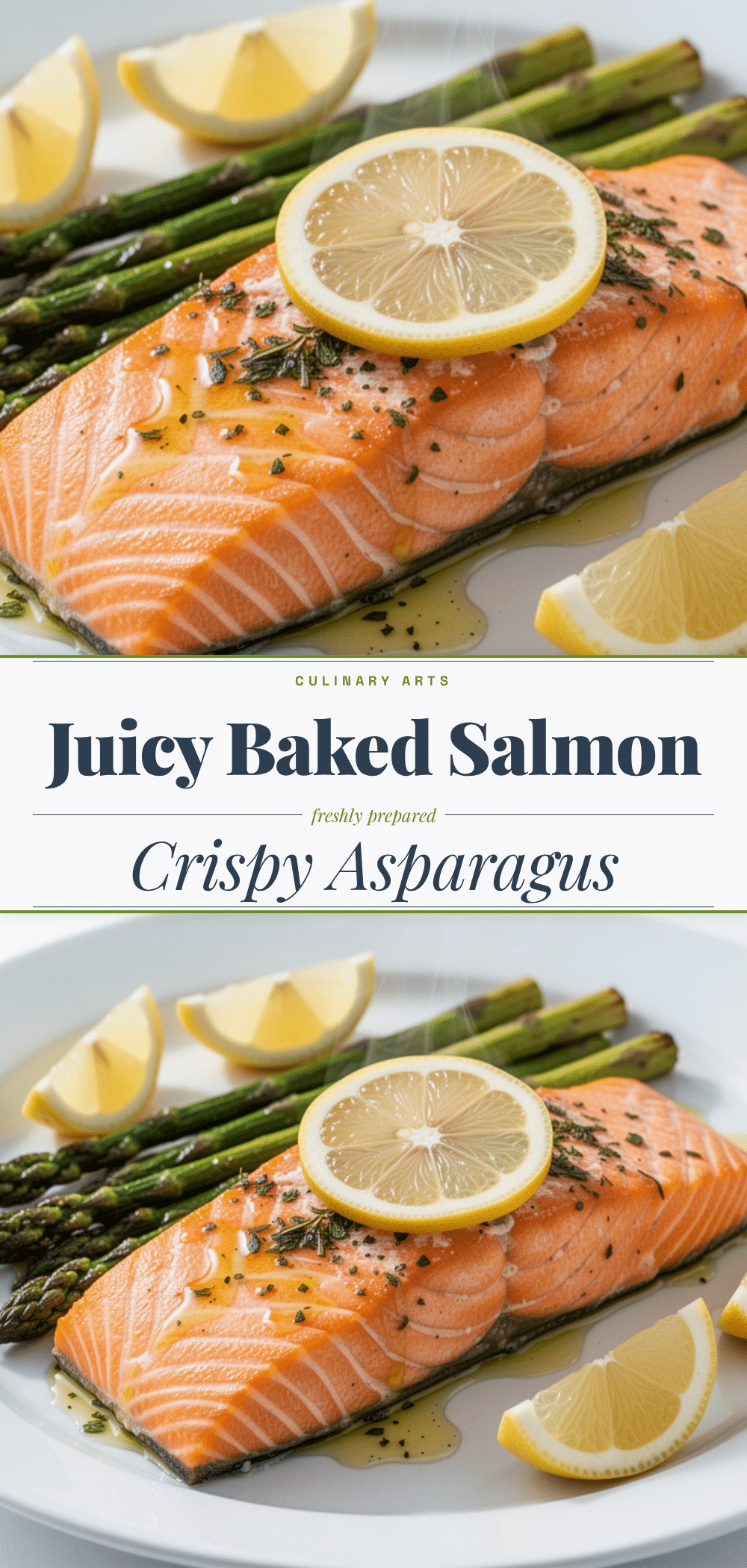
Healthy Baked Salmon with Roasted Asparagus
- Total Time: 25 minutes
- Yield: 4 servings 1x
Description
A quick and elegant one-pan weeknight dinner featuring wild-caught salmon and roasted asparagus seasoned with lemon, garlic, and dill. Ready in under 30 minutes with minimal cleanup.
Ingredients
- 4 salmon fillets (about 6 oz each)
- 2 tablespoons extra virgin olive oil, divided
- 1 large lemon (juiced and zested)
- 3 cloves garlic, minced
- 1 teaspoon dried dill
- 1 bunch asparagus spears (about 1 lb)
- 1/2 teaspoon garlic powder
- 1/2 teaspoon kosher salt, divided
- 1/4 teaspoon black pepper, divided
- 1/4 teaspoon red pepper flakes (optional)
- 2 tablespoons grated Parmesan cheese (optional)
Instructions
- Preheat oven to 400°F (200°C). Line a large half-sheet pan with parchment paper.
- Trim the woody ends from the asparagus spears by bending them until they snap naturally.
- Toss the trimmed asparagus with 1 tablespoon olive oil, garlic powder, 1/4 teaspoon salt, and 1/8 teaspoon pepper. Arrange in a single layer on one side of the prepared pan.
- Pat salmon fillets dry with paper towels. In a small bowl, whisk together the remaining 1 tablespoon olive oil, lemon juice, lemon zest, minced garlic, dill, red pepper flakes, 1/4 teaspoon salt, and 1/8 teaspoon pepper.
- Brush the lemon-herb mixture generously over the top of each salmon fillet.
- Place salmon fillets skin-side down on the other side of the sheet pan.
- Bake for 12-15 minutes, or until the salmon flakes easily with a fork and is opaque throughout, and the asparagus is tender-crisp.
- Remove from oven and let rest for 2 minutes before serving.
Notes
Do not overcook the salmon; it continues to cook after removal from the oven. For best results, pull salmon at 135°F internal temperature as it will rise to 145°F while resting. Ensure asparagus is in a single layer to prevent steaming. If using frozen salmon, thaw completely before cooking.
- Prep Time: 10 minutes
- Cook Time: 15 minutes
- Category: Main Course
- Cuisine: American
Nutrition
- Serving Size: 1 salmon fillet and
- Calories: 320
- Sugar: 3
- Sodium: 280
- Fat: 16
- Saturated Fat: 3
- Carbohydrates: 12
- Fiber: 4
- Protein: 34
Keywords: healthy salmon, baked salmon, roasted asparagus, one pan dinner, weeknight dinner, gluten free, dairy free option, omega 3