I have a confession to make. About six months ago, I stood in my kitchen at 6:45 PM on a Tuesday, staring into the open refrigerator, feeling that specific brand of panic that only happens when you realize you have nothing ready for dinner. My kids were already complaining about being “hangry,” my husband was logging onto a conference call in ten minutes, and I was pretty sure the only thing I could cook in under fifteen minutes was a bowl of cereal. But cereal felt like a surrender.
That was the moment I decided I needed a hero recipe. Something that looked impressive, tasted like it came from a sushi restaurant, but actually took less time than it does to scroll through delivery apps. Enter the Asian Glazed Salmon Rice Bowl with Sesame and Scallions. It’s become my lifeline. I’ve made it at least forty times since that Tuesday, and I’m not even remotely bored of it.
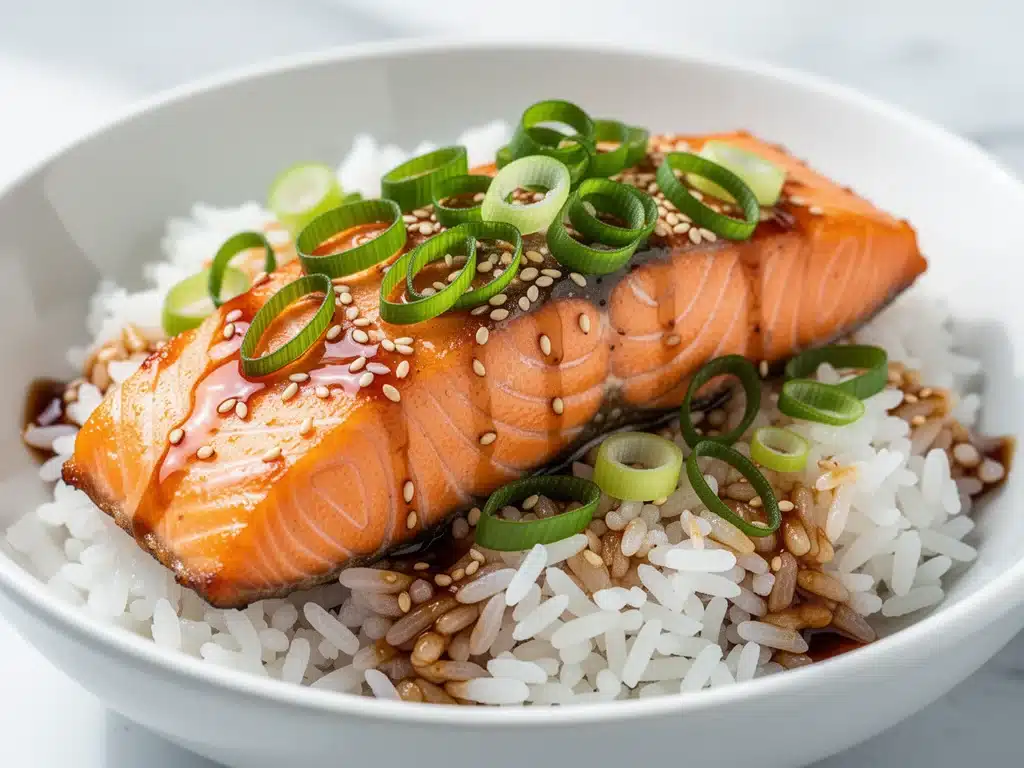
Here’s the thing about this dish: it’s deceptively simple. You might look at the ingredient list and think, “Okay, salmon, rice, soy sauce… easy.” But the magic is in the glaze. It’s sweet, salty, tangy, and garlicky all at once. It caramelizes on the salmon while it cooks, creating this sticky, glossy finish that makes everyone at the table stop talking and just eat. I remember the first time I served this, my picky seven-year-old, who usually only eats breadsticks, asked for “the shiny fish thing” three times. That’s when I knew I’d hit the jackpot.
This isn’t just about convenience, though. It’s about feeling like you’re treating yourself, even on the busiest nights. The combination of flaky, tender salmon with nutty sesame seeds and sharp scallions is just irresistible. It’s fresh, it’s healthy, and it’s fast. If you’re tired of the same old chicken breast routine, this is your sign to switch things up. Let me show you how to make this 15-minute miracle.
Why You’ll Love This Asian Glazed Salmon Bowl
There are a lot of reasons I keep coming back to this recipe, but they all boil down to one thing: it just works. No complicated techniques, no hard-to-find ingredients, and absolutely no stress. Here’s what makes this Asian Glazed Salmon Rice Bowl with Sesame and Scallions the king of my weekly rotation.
- Lightning Fast — Seriously. From the moment I turn on the stove to the moment I’m plating, it’s fifteen minutes. Maybe twenty if you’re being slow with the rice. I’ve timed it. I’ve rushed it. It always lands in that sweet spot.
- Pantry Staples — You probably have 80% of these ingredients right now. Soy sauce, rice vinegar, garlic, ginger, sesame oil. If you have these, you’re halfway to dinner. The rest is just fresh fish and veggies.
- Healthy Without Being Sad — This isn’t a “diet” meal that leaves you hungry an hour later. Salmon is packed with omega-3s and protein. The rice gives you energy. The veggies add crunch and fiber. It’s nourishing food that actually tastes good.
- Restaurant Quality at Home — I’ve served this to friends who are “foodies,” and they always ask for the recipe. The glaze is the secret weapon. It’s that sticky, restaurant-style sauce that makes people think you spent hours in the kitchen.
- Kid-Approved — I know, I know. Salmon can be tricky with kids because of the smell or texture. But this glaze masks any “fishy” taste completely. The sweet and savory profile is familiar and comforting. Plus, the sesame seeds add a nice crunch that kids usually love.
- Meal Prep Friendly — This tastes even better the next day. I often make extra salmon and rice on Sunday so I have quick lunches for the week. The flavors meld together beautifully in the fridge.
Real talk: this recipe has saved me from ordering takeout more times than I can count. It’s my go-to when I’m tired, when I’m busy, or when I just don’t feel like thinking. It’s reliable, delicious, and makes me feel like a competent human being. That’s worth something.
Ingredients You’ll Need
Here’s the best part: this recipe uses ingredients you likely already have in your pantry or fridge. I’m not asking you to go on a special shopping trip. Just grab some salmon and you’re good to go. Let’s break down what you need and why each piece matters.
For the Salmon
Salmon fillets (1.5 lbs / 680g) — Look for center-cut fillets. They’re the most uniform in thickness, which means they cook evenly. Wild-caught is better for flavor, but farmed is fine if it’s what’s on sale. Just make sure it’s fresh and smells like the ocean, not like a fish market.
Neutral oil (2 tablespoons) — I use avocado oil or vegetable oil. You need a high smoke point because you’re searing the salmon. Olive oil can burn at high heat, so skip it here.
For the Glaze
Soy sauce (3 tablespoons) — Use low-sodium if you can. It gives you more control over the saltiness. Regular soy sauce works too, just reduce the added salt later. I use Kikkoman because it’s consistent.
Rice vinegar (1 tablespoon) — This adds the necessary acidity to balance the sweetness. Don’t skip it. It’s what makes the sauce bright and not just heavy.
Honey (2 tablespoons) — Yes, honey. Maple syrup works too, but honey gives a nicer sheen and caramelizes better. If you’re avoiding sugar, use a zero-calorie sweetener, but the texture will be different.
Minced garlic (3 cloves) — Fresh is non-negotiable here. Jarred garlic tastes metallic and dull in a delicate glaze. Mince it yourself. It takes thirty seconds.
Grated fresh ginger (1 teaspoon) — Again, fresh. Pre-grated ginger in a tube is okay in a pinch, but fresh ginger has this zesty punch that wakes up the whole dish. Buy a knob of ginger and grate it as you go.
Sesame oil (1 teaspoon) — Toasted sesame oil. Not the raw kind. This is the nutty, aromatic oil that smells like an Asian restaurant. A little goes a long way.
For the Bowl
Short-grain rice (1 cup dry) — Sushi rice or Japanese short-grain rice is best. It’s sticky and chewy, perfect for holding the sauce. Long-grain rice like Basmati won’t work here; it’s too fluffy and separate.
Sesame seeds (1 tablespoon, toasted) — Toast them in a dry pan for two minutes. It unlocks that nutty flavor. Raw sesame seeds are fine, but toasted is better.
Scallions (2-3 stalks) — Thinly sliced. The white parts can go in the sauce, the green parts for garnish. They add a sharp, oniony bite that cuts through the richness of the fish.
Optional Add-ins — Avocado slices, cucumber ribbons, edamame, or pickled ginger. I love adding avocado for creaminess, but it’s not required.
Equipment Needed
You don’t need fancy gadgets for this. Here’s what I actually use, and what you can swap out if you don’t have it.
Non-stick skillet or cast iron pan — I prefer a non-stick skillet for salmon because it’s less likely to stick. Cast iron works too, but you need to be careful with the heat. A 10-inch skillet is perfect for four fillets.
Rice cooker or medium saucepan — If you have a rice cooker, use it. It’s foolproof. If not, a heavy-bottomed saucepan with a tight lid works. Avoid thin pots; they burn easily.
Small bowl — For whisking the glaze. Any small bowl will do.
Sharp knife and cutting board — For slicing scallions and prepping the fish. Make sure your knife is sharp; dull knives slip and hurt.
Measuring spoons — For the sauce. Accuracy matters here because the balance of sweet and salty is key.
How to Make It: Step-by-Step
Alright, let’s get cooking! I’m walking you through exactly how I do it, including the little tricks I’ve picked up over the years. This is going to be easy.
Step 1: Start the Rice (15-20 minutes)
Before you do anything else, get the rice going. Rinse 1 cup of short-grain rice under cold water until the water runs clear. This removes excess starch and prevents mushy rice. Add the rinsed rice to your rice cooker or saucepan with 1.25 cups of water. If using a saucepan, bring to a boil, then reduce heat to low, cover, and simmer for 15 minutes. Remove from heat and let it sit, covered, for another 5 minutes. Fluff with a fork. It should be tender and slightly sticky. Set aside.
Step 2: Make the Glaze (2 minutes)
While the rice cooks, whisk together 3 tablespoons soy sauce, 1 tablespoon rice vinegar, 2 tablespoons honey, 3 minced garlic cloves, 1 teaspoon grated ginger, and 1 teaspoon sesame oil in a small bowl. Stir until the honey is dissolved. Taste it. It should be sweet, salty, and tangy. If it’s too sweet, add a splash more vinegar. If it’s too salty, add a teaspoon of water. Adjust to your liking.
Step 3: Prep the Salmon (3 minutes)
Pat the salmon fillets dry with paper towels. This is crucial! Wet salmon steams instead of sears. Season both sides with a pinch of salt and pepper. If the fillets are very thick, you can score the skin lightly to help it cook evenly. Have your oil ready in the skillet.
Step 4: Sear the Salmon (4-5 minutes per side)
Heat 2 tablespoons of neutral oil in your skillet over medium-high heat. Once the oil is shimmering but not smoking, place the salmon fillets skin-side down (if skin-on) or presentation-side down. Press gently with a spatula for a few seconds to prevent curling. Cook undisturbed for 4-5 minutes. You want a nice golden crust. Flip the fillets carefully.
Step 5: Glaze and Finish (2-3 minutes)
Reduce heat to medium-low. Pour the glaze over the salmon fillets. It will bubble and sizzle. Spoon the glaze over the tops of the fish. Cover the pan with a lid and cook for another 2-3 minutes, or until the salmon is cooked through and the sauce has thickened slightly. The internal temperature should reach 145°F (63°C). Be careful not to overcook it; salmon should be slightly translucent in the very center for maximum juiciness.
Step 6: Assemble the Bowls (2 minutes)
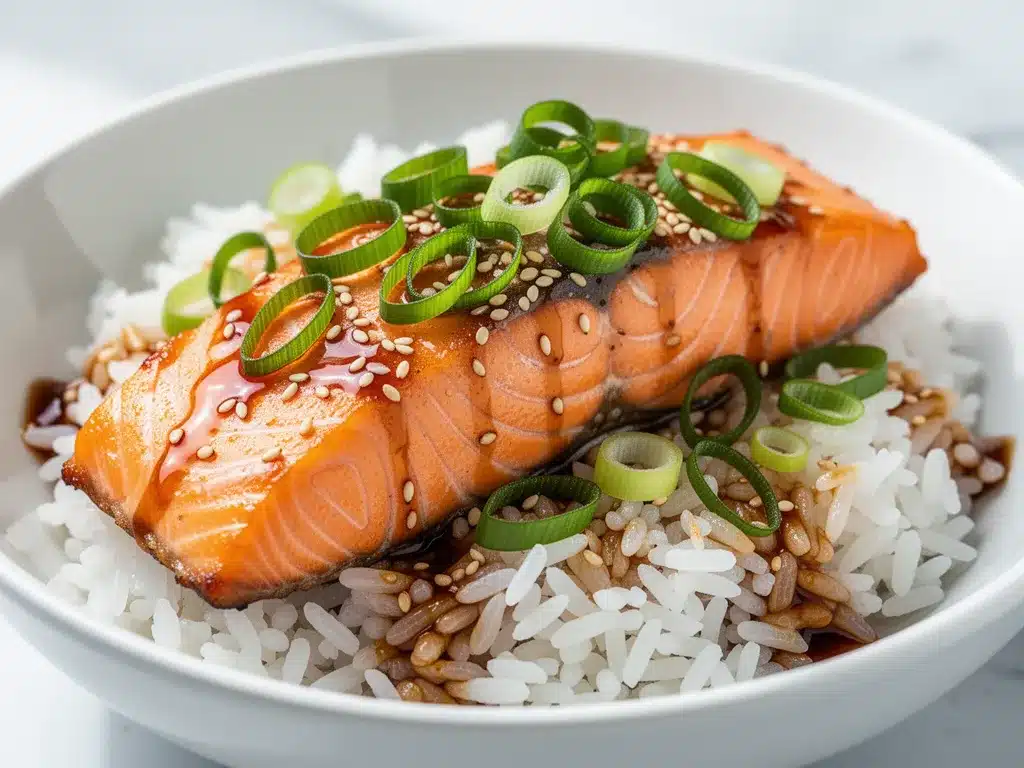
Fluff the rice. Divide it among four bowls. Place a piece of glazed salmon on top of each bowl. Drizzle any remaining sauce from the pan over the fish. Garnish generously with toasted sesame seeds and sliced scallions. Add avocado or cucumber if you’re using them. Serve immediately.
Expert Tips & Tricks
Here’s everything I’ve learned from making this dozens of times. These tips will save you from my mistakes.
- Don’t Skip the Drying — I cannot stress this enough. Wet salmon = steamed salmon = no crust. Pat it dry with paper towels until it’s almost bone dry. This ensures you get that beautiful sear.
- Watch the Heat — Medium-high for searing, medium-low for glazing. If the pan is too hot, the sugar in the honey will burn before the fish cooks. If it’s too low, the fish will dry out. Listen to the sizzle. It should be a lively bubble, not a violent roar.
- Toast Your Sesame Seeds — Raw sesame seeds are bland. Toast them in a dry pan for 2-3 minutes until they’re golden and fragrant. It takes two minutes but adds so much flavor.
- Reserve Some Sauce — I like to spoon half the glaze over the fish while it cooks, and reserve the rest to drizzle over the finished bowl. This keeps the sauce fresh and vibrant.
- Use a Thermometer — Salmon cooks fast. A digital thermometer is your best friend. Pull it at 140°F (60°C); it’ll carry over to 145°F (63°C) as it rests. Overcooked salmon is dry and disappointing.
Common Mistakes to Avoid:
- Mistake: Sauce is too thin. Fix: Let it simmer longer after flipping the fish. The sauce needs time to reduce and cling to the fish.
- Mistake: Fish is stuck to the pan. Fix: Don’t force it! If it’s sticking, it’s not ready to flip. Wait another minute. The fish will release naturally when a crust forms.
- Mistake: Rice is mushy. Fix: You didn’t rinse it enough, or you used too much water. Rinse until clear, and use the 1:1.25 ratio for short-grain rice.
Variations & Substitutions
Once you’ve nailed the basic version, here’s how you can mix it up. I’ve tried all of these.
Protein Swaps
Chicken Thighs — Cut into bite-sized pieces and cook like the salmon. The glaze works perfectly with chicken. Just cook it through to 165°F.
Shrimp — Use large shrimp. Cook for 2-3 minutes per side. The glaze is amazing with shrimp. Reduce cooking time significantly.
Tofu — Press firm tofu, cube it, and pan-fry until crispy. Pour the glaze over at the end. It’s a great vegetarian option.
Veggie Boosts
Broccoli — Steam or roast broccoli florets and serve on the side. The crunch contrasts nicely with the soft rice and fish.
Edamame — Shelled edamame adds protein and a pop of green. Throw them in at the last minute.
Cucumber Salad — Slice cucumber thinly, toss with rice vinegar, sugar, and salt. It’s refreshing and cuts the richness.
Dietary Modifications
Gluten-Free — Use tamari instead of soy sauce. Everything else is naturally gluten-free.
Dairy-Free — This recipe is already dairy-free. Just ensure your honey is vegan if you’re strict.
Low-Sodium — Use low-sodium soy sauce and reduce added salt. You can add a pinch of potassium chloride if you miss the saltiness.
Serving & Storage
How to Serve:
I usually serve this straight from the skillet at the dinner table—it looks rustic and stays warm. But here are other ways I’ve enjoyed it:
- Garlic bread (obviously)
- Simple green salad with sesame dressing
- Steamed bok choy
- Pickled ginger on the side
Storage Instructions:
Refrigerator: Store in an airtight container for up to 3 days. The rice will harden, so you’ll need to reheat it properly.
Reheating: Best method: Add a splash of water to the rice and microwave it, covered, for 1-2 minutes. Reheat the salmon gently in the microwave for 30-60 seconds, or better yet, pan-warm it with a little water to keep it moist. Don’t overheat the fish or it’ll get rubbery.
Freezing: Honestly, this doesn’t freeze well. The texture of the salmon changes, and the rice gets grainy. Make it fresh. If you must freeze, freeze the rice separately, but the salmon is best fresh.
Nutrition Information
I’m not a nutritionist, but here’s the breakdown if you’re tracking. This is per serving (based on 4 servings).
| Nutrient | Amount |
|---|---|
| Calories | 450 |
| Protein | 35g |
| Carbs | 40g |
| Fiber | 2g |
| Sugar | 12g |
| Fat | 18g |
| Sodium | 650mg |
What’s Good: High in protein and omega-3s. Good source of complex carbs from the rice. Low in saturated fat.
What to Know: Sodium is moderate due to soy sauce. Use low-sodium soy sauce to reduce. Sugar comes from honey; reduce if needed.
My Take: This is a balanced, nutritious meal. It’s not “diet food,” but it’s wholesome and filling. I love that it makes me feel good without being boring.
Final Thoughts
So that’s my Asian Glazed Salmon Rice Bowl with Sesame and Scallions! I’ve probably talked your ear off at this point, but when you make a recipe this often, you have a lot to say about it.
This has saved weeknight dinners more times than I can count. It’s my answer to “what’s for dinner” when I’m tired, don’t want takeout, and still want something that tastes really good. My kids are happy, my husband’s happy, and I’m happy because I’m not stressed about cooking.
Make it yours! Try different add-ins, swap in your favorite vegetables, adjust the sweetness of the glaze. The best recipes are the ones you adapt to your family’s tastes.
If you make this, drop a comment and let me know what you think! I love hearing how recipes turn out in your kitchen. And if something doesn’t work, tell me that too—I’m here to help troubleshoot.
Happy cooking! And I hope your kitchen smells half as good as mine does right now.
Frequently Asked Questions
Can I use frozen salmon?
Yes, but you need to thaw it completely first. Pat it dry extra well. Frozen salmon releases more water, so you might need to sear it a bit longer. Fresh is always better, but frozen works in a pinch.
Why did my sauce burn?
Honey burns easily! If your pan was too hot, the sugar caramelized too fast. Next time, reduce the heat to medium-low when you add the glaze. Stir constantly to keep it moving.
Can I make this ahead for a dinner party?
Sort of. Make the rice and glaze ahead. Cook the salmon fresh right before serving. Salmon is best hot and fresh. Reheating salmon can make it dry, so cook it last.
What rice is best for this?
Short-grain Japanese rice (sushi rice) is ideal. It’s sticky and chewy. Medium-grain rice works too. Avoid long-grain rice like Basmati or Jasmine; they’re too separate and fluffy.
Can I substitute honey with maple syrup?
Yes! Maple syrup works great. It has a distinct flavor, but it’s delicious. Just note that it doesn’t caramelize as nicely as honey, so the sauce might be thinner.
How do I know when the salmon is done?
Use a thermometer. 145°F (63°C) is safe. Or, check the texture: it should flake easily with a fork but still look slightly translucent in the center. If it’s opaque all the way through, it’s overcooked.
Pin This Recipe!
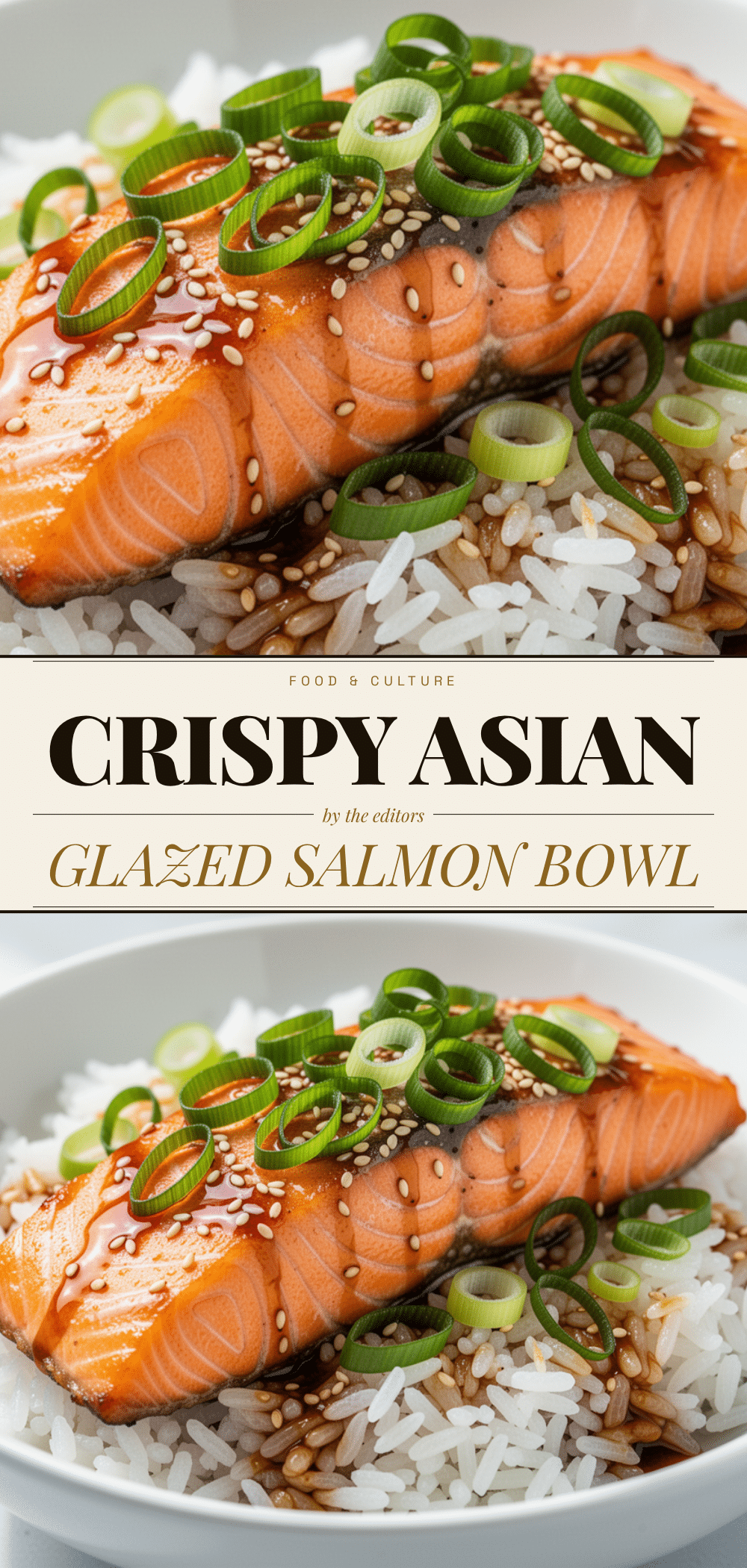
Asian Glazed Salmon Rice Bowl: Easy 15-Minute Dinner
- Total Time: 25 minutes
- Yield: 4 servings 1x
Description
A quick, healthy, and restaurant-quality dinner featuring seared salmon with a sweet and savory honey-soy glaze, served over short-grain rice with sesame seeds and scallions.
Ingredients
- 1.5 lbs salmon fillets (center-cut)
- 2 tablespoons neutral oil (avocado or vegetable)
- 3 tablespoons soy sauce (low-sodium recommended)
- 1 tablespoon rice vinegar
- 2 tablespoons honey
- 3 cloves garlic (minced)
- 1 teaspoon fresh ginger (grated)
- 1 teaspoon toasted sesame oil
- 1 cup short-grain rice (sushi rice)
- 1.25 cups water (for rice)
- 1 tablespoon sesame seeds (toasted)
- 2–3 stalks scallions (thinly sliced)
- Salt and pepper to taste
- Optional: Avocado slices, cucumber ribbons, edamame, pickled ginger
Instructions
- Rinse 1 cup of short-grain rice under cold water until clear. Add to a rice cooker or saucepan with 1.25 cups of water. Cook according to package instructions or simmer covered for 15 minutes, then let sit for 5 minutes. Fluff with a fork.
- In a small bowl, whisk together soy sauce, rice vinegar, honey, minced garlic, grated ginger, and sesame oil until the honey is dissolved. Taste and adjust if necessary.
- Pat salmon fillets dry with paper towels. Season both sides with salt and pepper.
- Heat neutral oil in a non-stick skillet or cast iron pan over medium-high heat until shimmering.
- Place salmon fillets skin-side down (or presentation-side down) in the pan. Press gently to prevent curling. Cook undisturbed for 4-5 minutes until a golden crust forms.
- Flip the fillets carefully. Reduce heat to medium-low.
- Pour the glaze over the salmon. Spoon sauce over the tops. Cover and cook for 2-3 minutes until the salmon reaches an internal temperature of 145°F (63°C) and the sauce has thickened.
- Divide cooked rice among four bowls. Place a glazed salmon fillet on top of each bowl.
- Drizzle remaining sauce from the pan over the fish. Garnish with toasted sesame seeds and sliced scallions. Serve immediately.
Notes
Pat the salmon dry before cooking to ensure a good sear. Toast sesame seeds in a dry pan for 2 minutes for better flavor. Use a thermometer to check doneness (145°F). Do not overcook the salmon. Rice should be rinsed to remove excess starch.
- Prep Time: 10 minutes
- Cook Time: 15 minutes
- Category: Main Course
- Cuisine: Asian
Nutrition
- Serving Size: 1 fillet with 1 cup
- Calories: 450
- Sugar: 12
- Sodium: 650
- Fat: 18
- Saturated Fat: 3
- Carbohydrates: 40
- Fiber: 2
- Protein: 35
Keywords: salmon, rice bowl, asian glazed salmon, quick dinner, healthy seafood, sesame scallions, 15 minute meals, weeknight dinner