Last Tuesday, I came home from work completely drained. My brain was foggy, my stomach was growling, and the thought of chopping vegetables for a proper dinner felt like climbing a mountain. I stared into my fridge, hoping for a miracle. There was a bag of frozen shrimp, some sad-looking cherry tomatoes, a jar of olives, and a bottle of olive oil that had been sitting there since Christmas.
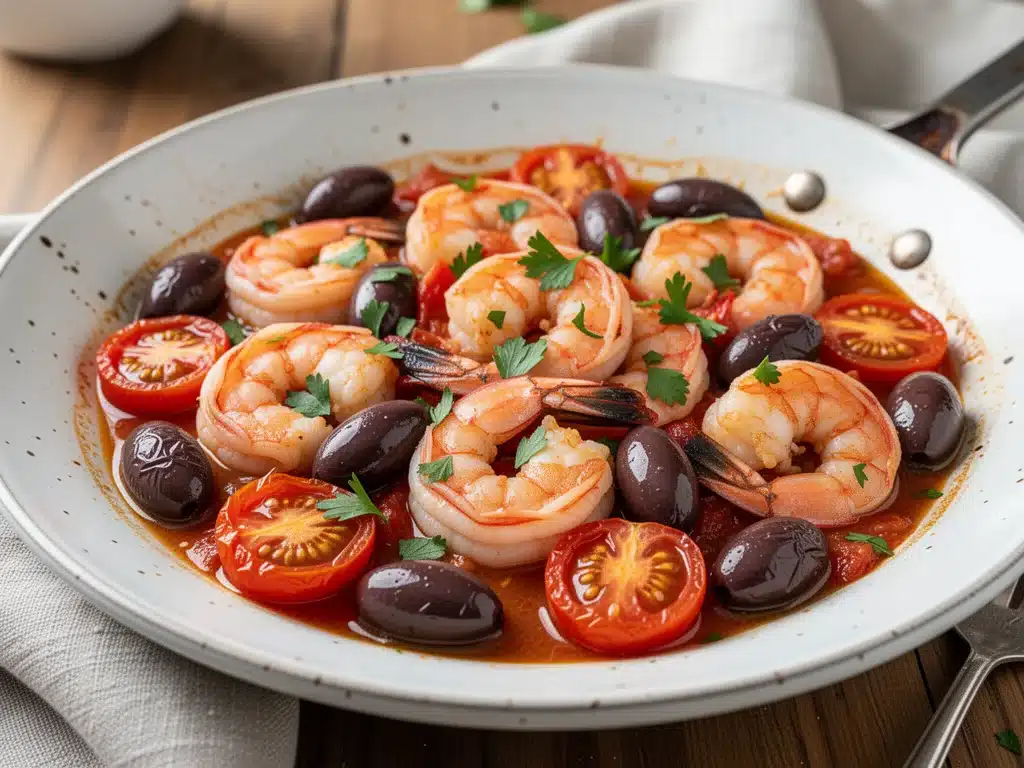
I threw them in a skillet with some garlic, lemon, and a handful of fresh parsley, and what came out thirty minutes later was genuinely magical. It tasted like a vacation. It tasted like I had ordered the most expensive dish on the menu at a beachside taverna in Santorini. But instead of spending $45 and waiting an hour for delivery, I ate it for under $15 in my pajamas.
This Mediterranean Shrimp Skillet with Tomatoes and Kalamata Olives has since become my secret weapon for those “I have zero energy” weeknights. It’s vibrant, it’s healthy, and it looks like you actually tried. My husband asks for this one specifically when he knows I’ve had a long day, probably because he can smell the lemon and garlic from the hallway.
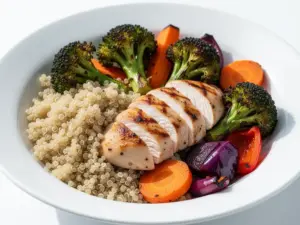
I’ve tested this recipe about a dozen times now, tweaking the ratios of tomatoes to olives and figuring out the perfect sear for the shrimp. Here’s the thing about shrimp—it cooks incredibly fast. Too fast, if you’re not paying attention. But once you get the rhythm, this dinner practically makes itself. It’s one of those meals that feels fancy but is stupidly simple. If you’re looking for a healthy chicken and veggie skillet alternative, this shrimp version is just as easy and cooks even faster.
Why You’ll Love This Mediterranean Shrimp Skillet
There are a few reasons this has replaced pizza night in our house, and honestly, it’s hard to argue with results. This recipe hits every single one of my weeknight dinner requirements: it’s fast, it’s flavorful, it’s healthy, and it cleans up easily.
- Lightning Fast — Seriously, the active cooking time is about 15 minutes. The shrimp cooks in 2-3 minutes per side. You can have dinner on the table in 30 minutes from start to finish. I’ve made this after dropping kids off at soccer practice, and it still worked.
- One-Pan Wonder — This is the biggest selling point for me. One skillet. One plate. Minimal dishes. If you’re tired after work, the last thing you want to do is wash a colander, a cutting board, and three bowls. Here, you just rinse your skillet.
- Flavor Bomb — The combination of salty Kalamata olives, sweet roasted tomatoes, and zesty lemon creates a complex flavor profile that feels intentional. It’s not just “boiled shrimp.” It’s a complete meal in a pan.
- Healthy Without Being Boring — This is packed with protein and vegetables, low in carbs, and full of healthy fats from the olive oil. It’s the kind of meal that leaves you feeling energized, not sluggish, about an hour later.
- Pantry Friendly — You probably have most of these ingredients already. Frozen shrimp is always in my freezer. The rest is basic produce and spices. It’s a great way to use up those tomatoes that are about to go soft.
Real talk? This recipe saves me on weeknights when I don’t want to order takeout but also don’t want to spend hours cooking. It’s my go-to when I need dinner to just work, look beautiful, and taste incredible.
Ingredients You’ll Need
Here’s the best part: you probably have most of this already in your kitchen. This isn’t a recipe that requires a special trip to an exotic grocery store. It uses simple, fresh ingredients that come together in a harmonious way.
The Star of the Show
Shrimp (1.5 lbs / 680g) — I use large or extra-large shrimp, peeled and deveined. You can buy them fresh or frozen (just thaw them first). Look for ones that are labeled “wild-caught” if you can, but farmed is fine too. The key is to get them raw. Pre-cooked shrimp will just get rubbery in this dish. I always buy the bag of frozen shrimp and thaw them in cold water for 15 minutes before cooking.
The Flavor Base
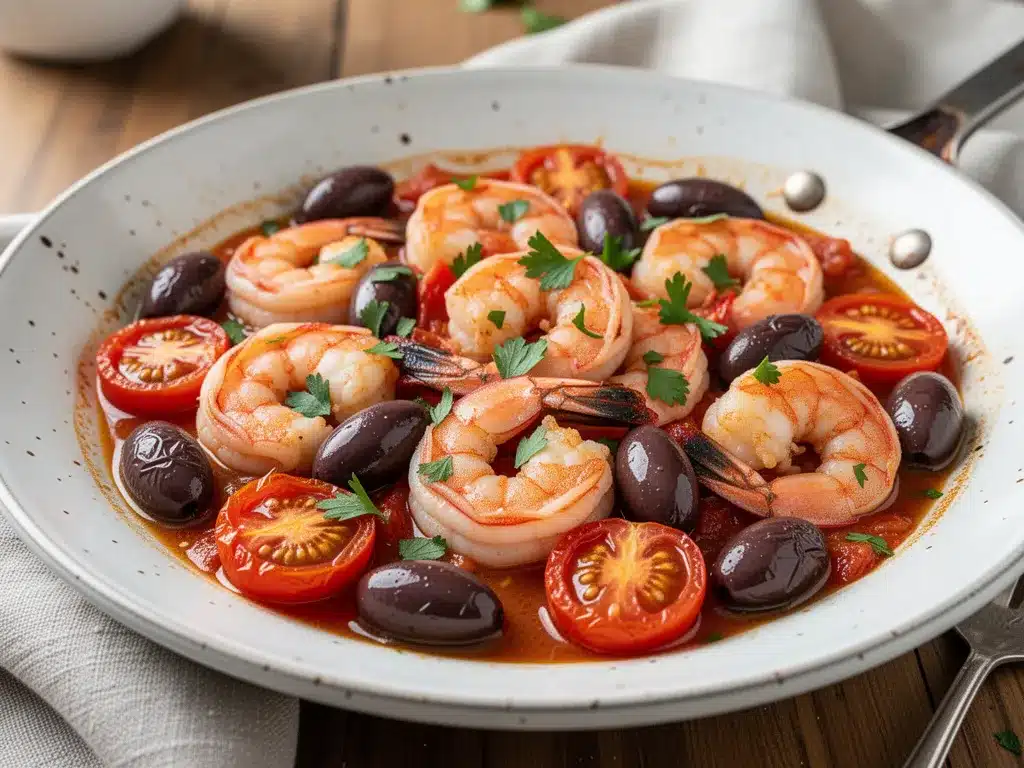
Olive Oil (3 tablespoons / 45ml) — Use good quality extra virgin olive oil here. Since this is a Mediterranean dish, the oil is a major flavor component. Don’t skimp on the quality. I keep a bottle of mild EVOO for cooking and a more robust one for drizzling.
Garlic (4-5 cloves, minced / about 2 tablespoons) — Yes, five cloves. Don’t be shy. Garlic is the backbone of this skillet. Fresh only—no jarred garlic. It tastes too metallic in this delicate dish. Mince it finely so it distributes evenly.
Red Pepper Flakes (½ teaspoon) — Optional, but I highly recommend it. It adds a gentle warmth that cuts through the richness of the shrimp and olives. If you hate spice, skip it. If you like a little kick, use the full teaspoon.
The Vegetables & Fruits
Cherry Tomatoes (2 cups / about 300g) — I use a mix of red and yellow cherry tomatoes for color, but red works fine. They burst in the pan, creating a natural sauce. If you only have large tomatoes, dice them, but cherry tomatoes are better because they have a higher skin-to-flesh ratio, which gives you more flavor.
Kalamata Olives (½ cup / about 75g) — These are non-negotiable for me. They’re briny, meaty, and add that classic Mediterranean punch. Pitted olives are essential—you don’t want to be spitting pits while eating dinner. If you can’t find Kalamata, green olives work, but they’re sharper and less fruity.
The Finishers
Fresh Lemon (1 large) — You’ll need the juice of one lemon and some zest. The acid is crucial. It brightens up the heavy flavors of the olive oil and cheese. Squeeze it right before you serve so it doesn’t oxidize.
Fresh Parsley (½ cup, chopped) — Flat-leaf parsley is best. It adds a fresh, grassy note that ties everything together. Dried parsley just doesn’t work here. It needs to be fresh.
Feta Cheese (½ cup / 60g, crumbled) — Optional, but I think it’s worth it. A sprinkle of crumbled feta on top adds a creamy, salty contrast. I use a block of feta and crumble it myself because pre-crumbled feta has anti-caking agents that make it taste dry.
Bread — For soaking up the juices. Crusty baguette or pita bread is perfect. I usually just tear off pieces with my hands.
Equipment Needed
You don’t need fancy equipment for this. Here’s what I actually use, and what you can swap out.
Large Skillet or Sauté Pan — I use a 12-inch stainless steel skillet. It needs to be big enough to hold the shrimp in a single layer. If your pan is too small, the shrimp will steam instead of sear, and you won’t get that nice brown color. Cast iron works too, but stainless steel gives you better browning control.
Wooden Spoon or Spatula — For stirring. Silicone works too. Just avoid metal if you’re using a non-stick pan.
Sharp Knife — For chopping the parsley and mincing the garlic. A dull knife makes mincing garlic a nightmare. I use my chef’s knife for everything.
Measuring Spoons — Standard stuff. Dollar store versions work fine.
Zester or Microplane — For the lemon zest. If you don’t have one, a regular grater works, but be careful not to get the white pith, which is bitter.
Colander — For draining the thawed shrimp. Or just pat them dry with paper towels, which is what I usually do.
How to Make It: Step-by-Step
Alright, let’s make this! I’m walking you through exactly how I do it, including the little tricks I’ve picked up over the years.
Step 1: Prep Your Shrimp (5 minutes)
If you’re using frozen shrimp, thaw them in a bowl of cold water for 15-20 minutes. Drain well and pat them completely dry with paper towels. This is crucial. Wet shrimp will steam instead of sear. I know it’s annoying, but drying them makes a huge difference in texture. Season them lightly with salt and pepper while they dry.
Step 2: Sauté the Aromatics (2 minutes)
Heat the olive oil in your large skillet over medium heat. Once the oil shimmers (not smoking), add the minced garlic and red pepper flakes. Stir constantly for about 30-60 seconds. You want the garlic to be fragrant but not brown. Browned garlic tastes bitter. If it starts to darken, lower the heat immediately.
Step 3: Cook the Tomatoes (3-4 minutes)
Add the cherry tomatoes to the skillet. Let them cook undisturbed for 2 minutes to start softening, then stir and cook for another 2 minutes until they start to burst and release their juices. You want them to be soft and jammy, not raw. This creates the base of the sauce.
Step 4: Add the Olives and Shrimp (5-6 minutes)
Stir in the Kalamata olives and let them heat through for 30 seconds. Then, add the shrimp in a single layer. Don’t crowd the pan! If your pan is small, cook in batches. Sear the shrimp for 2-3 minutes on one side until they turn pink and opaque. Flip them over and cook for another 1-2 minutes. Shrimp cook very quickly, so keep an eye on them. They are done when they are opaque and slightly curled.
Step 5: Deglaze and Finish (2 minutes)
Remove the skillet from the heat. Squeeze the juice of one large lemon over the shrimp and tomatoes. Sprinkle the lemon zest on top. Stir everything together gently. The acid will deglaze the pan, picking up all those flavorful brown bits from the bottom.
Step 6: Garnish and Serve
Scatter the chopped fresh parsley over the top. If you’re using feta, crumble it over the skillet now. Serve immediately with crusty bread for dipping. The bread is essential for soaking up that delicious lemon-garlic oil.
Total Time: About 30 minutes (10 minutes prep, 20 minutes cooking)
Expert Tips & Tricks
Here’s everything I’ve learned from making this dozens of times. These tips will save you from my mistakes.
Don’t Overcook the Shrimp
This is the #1 mistake people make. Shrimp goes from perfect to rubbery in about 30 seconds. They are done when they are opaque and pink. If they look translucent, they need more time. If they look like little rubber bands, you’ve waited too long. I usually take them off the heat a minute before they look done, as they will continue to cook from residual heat.
Pat the Shrimp Dry
I cannot stress this enough. Moisture is the enemy of searing. If your shrimp are wet, they will steam in their own juices. Use paper towels. Be aggressive with the drying. It takes 2 minutes but makes a world of difference.
Use Good Olive Oil
Since this dish has so few ingredients, the olive oil is a main character. Don’t use the cheap stuff from the gas station. Use a decent extra virgin olive oil. You’ll taste the difference.
Toast the Garlic Carefully
Garlic burns faster than you think. Medium heat is perfect. If you’re using a thin-bottomed pan, use medium-low. You want the garlic to release its oils, not turn black.
Save the Bread
The juices in the pan are liquid gold. Do not throw them away. Serve with crusty bread, pita, or even over couscous or rice if you want more carbs. I usually just tear off pieces of baguette and dip them directly into the skillet.
Variations & Substitutions
Once you’ve nailed the basic version, here’s how you can mix it up. I’ve tried all of these.
White Wine Version
Add ¼ cup of dry white wine (like Sauvignon Blanc or Pinot Grigio) after the tomatoes burst. Let it simmer for 2 minutes to reduce before adding the shrimp. This adds a nice depth of flavor.
Sausage Skillet
Add ½ lb of sliced Italian sausage (spicy or mild) to the skillet before the garlic. Cook until browned, then remove and set aside. Add the garlic, then proceed with the recipe. Stir the sausage back in at the end. This makes it heartier and more filling.
Spinach Addition
Toss in 2 cups of fresh spinach in the last minute of cooking. It will wilt down quickly. This adds a pop of green and extra nutrients. My kids love this version because they can’t see the spinach.
Cherry Tomato Sub
If you can’t find cherry tomatoes, use diced Roma tomatoes. They have less water, so you may need to cook them a bit longer to get that jammy texture.
Gluten-Free
This recipe is naturally gluten-free (if you skip the bread). Just make sure your olives and feta are certified gluten-free, as some brands may have cross-contamination.
Dairy-Free
Simply omit the feta cheese. The dish is still delicious without it. The olives and tomatoes provide plenty of saltiness.
Serving & Storage
How to Serve:
I usually serve this straight from the skillet at the dinner table—it looks rustic and stays warm. But here are other ways I’ve enjoyed it:
- Over Couscous or Quinoa: Spoon the shrimp and sauce over a bed of fluffy couscous or quinoa for a more substantial meal.
- With Pita Bread: Warm pita bread is perfect for scooping up the shrimp and tomatoes.
- With Crusty Baguette: The classic choice. Dip, dip, dip.
- As an Appetizer: Serve in small bowls with toothpicks for a fancy appetizer. Add some feta and olives on top.
Storage Instructions:
Refrigerator: Store leftovers in an airtight container for up to 3 days. The shrimp will continue to absorb the flavors, so it actually tastes better the next day.
Reheating: Reheat gently in a skillet over low heat with a splash of water or broth. Do not microwave, as the shrimp will become rubbery. If you must microwave, do it in 30-second intervals and add a little liquid.
Freezing: I don’t recommend freezing this dish. The shrimp will become tough and the tomatoes will turn mushy when thawed. It’s best eaten fresh.
Nutrition Information
I’m not a nutritionist, but here’s the breakdown if you’re tracking. This is per serving based on 4 servings.
- Calories: 320
- Protein: 28g
- Carbs: 12g
- Fiber: 3g
- Sugar: 6g
- Fat: 18g
- Saturated Fat: 4g
- Cholesterol: 220mg
- Sodium: 650mg
What’s Good: High in protein, low in carbs, rich in healthy fats from olive oil and olives.
What to Know: Higher in sodium due to the olives and feta. Use low-sodium olives if you’re watching your salt intake.
My Take: This is a healthy, balanced meal that doesn’t feel like diet food. It’s satisfying and flavorful, so you won’t feel deprived.
Final Thoughts
So that’s my Mediterranean Shrimp Skillet! I’ve probably talked your ear off at this point, but when you make a recipe this often, you have a lot to say about it. This has saved weeknight dinners more times than I can count. It’s my answer to “what’s for dinner” when I’m tired, don’t want takeout, and still want something that tastes really good. My kids are happy, my husband’s happy, and I’m happy because I’m not stressed about cooking.
Make it yours! Try different add-ins, swap in your favorite vegetables, adjust the garlic (though more is always better in my opinion). The best recipes are the ones you adapt to your family’s tastes. If you make this, drop a comment and let me know what you think! I love hearing how recipes turn out in your kitchen. And if something doesn’t work, tell me that too—I’m here to help troubleshoot.
Happy cooking! And I hope your kitchen smells half as good as mine does right now.
Frequently Asked Questions
Can I use frozen shrimp?
Yes! In fact, frozen shrimp is often fresher than “fresh” shrimp because it’s frozen at peak freshness. Just make sure to thaw it completely in cold water and pat it very dry before cooking. Wet shrimp will steam instead of sear.
What kind of wine goes with this?
I’m not a wine expert, but a crisp, dry white wine like Sauvignon Blanc, Pinot Grigio, or a light Chardonnay works great. The acidity in the wine complements the lemon in the dish. If you don’t drink wine, lemon water with herbs is a nice non-alcoholic option.
Can I make this ahead for a dinner party?
Sort of. You can prep the ingredients (chop parsley, mince garlic, measure olives) ahead of time. But cook the shrimp right before serving. Shrimp cooks so fast that it’s best enjoyed hot and fresh. If you cook it too early, it will get tough.
Why did my shrimp turn out rubbery?
You probably overcooked them. Shrimp cooks in 2-3 minutes per side. Once they turn opaque and pink, they’re done. They continue to cook from residual heat, so take them off the heat a minute early if you’re unsure.
Can I substitute the olives?
You can, but Kalamata olives have a unique briny, fruity flavor that defines this dish. If you can’t find them, green olives work, but they’re sharper. Black olives are too mild. If you really don’t like olives, you can skip them, but the dish will be less complex.
How do I reheat leftovers without it getting dry?
Add a splash of water or broth to a skillet, add your leftover shrimp, and heat gently over low heat, stirring frequently. The extra liquid brings back the moisture. Microwave sort of works but tends to dry it out. If you do microwave, definitely add a splash of liquid first and heat in short bursts, stirring between.
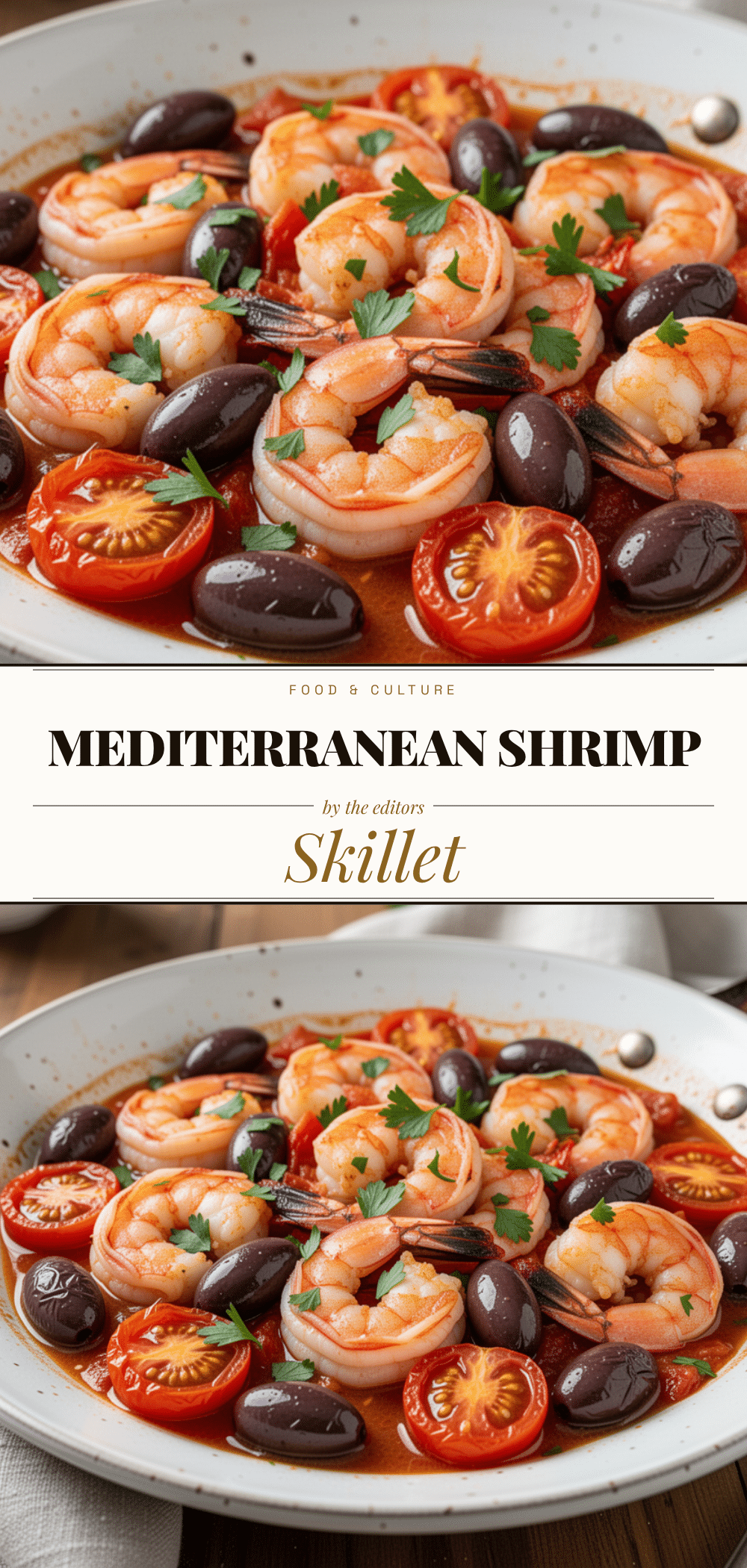
Pin This Recipe!
Mediterranean Shrimp Skillet: 30-Minute Healthy Weeknight Dinner
- Total Time: 30 minutes
- Yield: 4 servings 1x
Description
A vibrant, one-pan Mediterranean shrimp skillet with cherry tomatoes, Kalamata olives, and lemon. This healthy, low-carb dinner is ready in 30 minutes and perfect for busy weeknights.
Ingredients
- 1.5 lbs large or extra-large shrimp, peeled and deveined
- 3 tablespoons extra virgin olive oil
- 4–5 cloves garlic, minced
- 1/2 teaspoon red pepper flakes
- 2 cups cherry tomatoes
- 1/2 cup Kalamata olives, pitted
- 1 large lemon (juice and zest)
- 1/2 cup fresh flat-leaf parsley, chopped
- 1/2 cup feta cheese, crumbled (optional)
- Salt and black pepper to taste
- Crusty baguette or pita bread for serving
Instructions
- Thaw frozen shrimp in cold water if using, then drain and pat completely dry with paper towels. Season lightly with salt and pepper.
- Heat olive oil in a large skillet over medium heat until shimmering.
- Add minced garlic and red pepper flakes; stir constantly for 30-60 seconds until fragrant but not browned.
- Add cherry tomatoes and cook undisturbed for 2 minutes, then stir and cook for another 2 minutes until soft and bursting.
- Stir in Kalamata olives and heat for 30 seconds.
- Add shrimp in a single layer. Sear for 2-3 minutes on one side until pink, then flip and cook for 1-2 minutes until opaque.
- Remove skillet from heat. Squeeze lemon juice over the shrimp and sprinkle with lemon zest.
- Gently stir to deglaze the pan. Scatter fresh parsley and crumbled feta cheese over the top.
- Serve immediately with crusty bread to soak up the juices.
Notes
Pat shrimp dry thoroughly to ensure proper searing. Do not overcook shrimp as they become rubbery quickly. Use good quality extra virgin olive oil as it is a main flavor component. If using frozen shrimp, thaw in cold water for 15-20 minutes before cooking. This dish is naturally gluten-free if served without bread.
- Prep Time: 10 minutes
- Cook Time: 20 minutes
- Category: Main Course
- Cuisine: Mediterranean
Nutrition
- Serving Size: Approximately 1/4 of
- Calories: 320
- Sugar: 6
- Sodium: 650
- Fat: 18
- Saturated Fat: 4
- Carbohydrates: 12
- Fiber: 3
- Protein: 28
Keywords: Mediterranean shrimp, shrimp skillet, healthy weeknight dinner, one pan meal, gluten-free, low carb, quick dinner, shrimp and tomatoes