I still remember the first time I cooked salmon on a cedar plank. I was standing on my back deck at 9 PM, holding a piece of wood like it was a sacred artifact, terrified that I was about to burn my house down. I’d watched a cooking show where the chef made it look effortless, like grilling a sandwich. But when I opened the grill lid, smoke was billowing everywhere, and my salmon looked more like a charcoal briquette than dinner. I scraped the burnt bits off, ate the rest with a side of shame, and told myself it was a fluke.
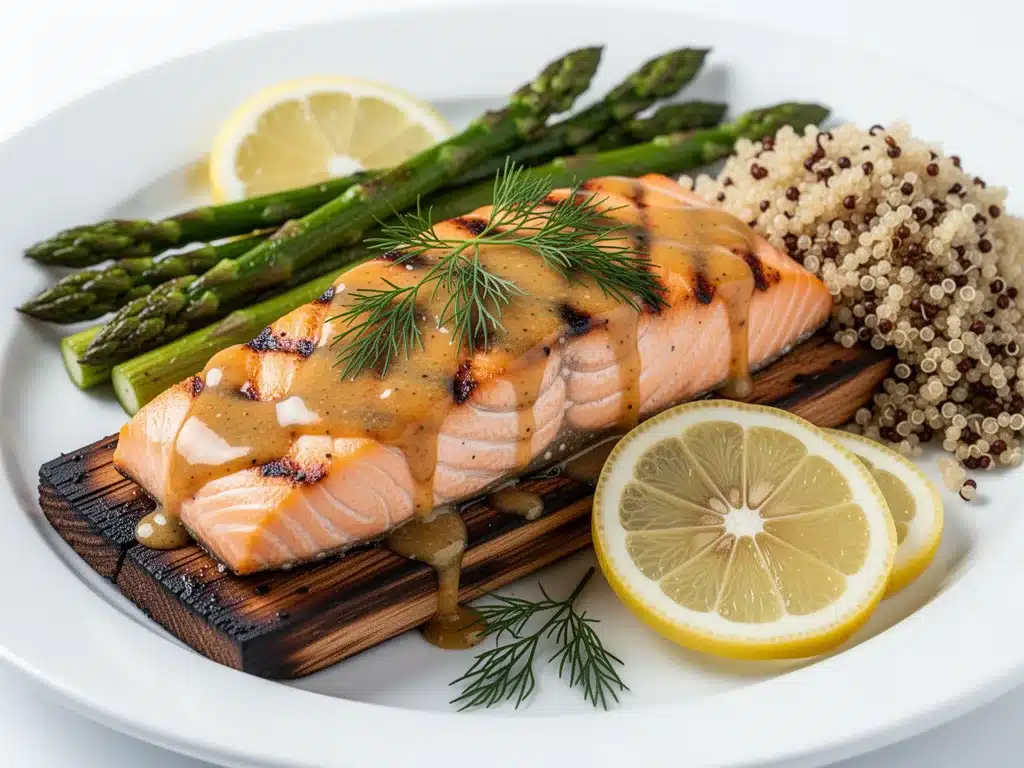
That was five years ago. Today, Cedar Plank Grilled Salmon with Maple Mustard Glaze is my absolute go-to for summer dinners. It’s not just because it tastes incredible (though the smoky-sweet combo is seriously addictive). It’s because this method has completely changed how I approach cooking fish on the grill. No more flip-flopping fillets, no more sticking to the grate, and definitely no more dry, overcooked pieces. The plank does all the heavy lifting, steaming the fish in its own juices while infusing it with that incredible woody aroma. And that glaze? It’s the kind of sweet-tangy finish that makes my husband stop scrolling through his phone and ask, “Can we have this for dinner again?”
I’ve tested this recipe so many times—on gas grills, charcoal grills, and even in my backyard when my husband forgot to buy charcoal—that I know exactly what works and what doesn’t. This isn’t just another grilled salmon recipe. It’s the one that finally made me confident enough to invite friends over for a “casual” dinner that actually impressed everyone. If you’ve been intimidated by grilling fish or tired of bland takeout, this is your sign to grab a plank and get grilling. Trust me, your taste buds will thank you.
Why You’ll Love This Recipe
There are a lot of reasons to make this Cedar Plank Grilled Salmon with Maple Mustard Glaze, but let’s be real: you’re probably here because you want dinner that feels fancy but doesn’t require you to stand over a stove for two hours. Here’s why this method wins every single time:
- Zero Sticking Issues — This is the biggest game-changer. Salmon is delicate, and on a regular grate, it loves to tear and stick. On a cedar plank? It just glides. The wood creates a non-stick surface naturally. I’ve never lost a single fillet to the grill grates since I started using planks.
- Restaurant-Quality Smokiness — You don’t need to be a pitmaster to get that deep, wood-fired flavor. The plank smolders as it cooks, infusing the salmon with a subtle cedar scent that you can’t fake with liquid smoke. It tastes like you spent hours at a high-end seafood shack.
- Incredibly Juicy Results — Grilling often dries out lean fish. But the plank acts like a lid, trapping moisture and steaming the fish gently. The result is salmon that’s flaky, tender, and practically melts in your mouth. I’ve made this for picky eaters who usually complain about “dry fish,” and they always go back for seconds.
- Minimal Cleanup — Seriously, this is the best part. You don’t have to scrub a greasy grill grate or wash a baking sheet. You just toss the plank in the compost (or trash if it’s too charred) and wipe down the grill. It’s a 10-minute cleanup job, which matters when you’re hungry and tired.
- Impress Without the Stress — You can prep the glaze and soak the plank while you’re getting ready. When your guests arrive, the salmon is already in the oven or on the grill, cooking itself. You’re free to actually enjoy your party instead of playing chef in the kitchen.
This recipe has saved me more dinner parties than I can count. It’s elegant, it’s flavorful, and it’s foolproof. Once you try it, you’ll wonder why you ever bothered with foil packets or direct grilling.
Ingredients You’ll Need
One of the best things about this Cedar Plank Grilled Salmon with Maple Mustard Glaze is how simple the ingredient list is. You don’t need a specialty store or a fancy pantry. Here’s what you need to make it, along with my honest thoughts on each one.
For the Salmon & Plank
Cedar Planks (1-2 per serving) — This is the star of the show. You can buy these at most hardware stores (Home Depot, Lowe’s) or garden centers. Look for “grilling planks” made from Western Red Cedar. They usually come in packs of 3-4. Don’t use just any wood—only use wood labeled safe for grilling. It’s been treated to burn slowly and safely.
Salmon Fillets (1.5 lbs / 680g) — I prefer center-cut fillets because they’re uniform in thickness, which means even cooking. Skin-on or skin-off is up to you. I usually leave the skin on because it helps hold the fish together on the plank, but it’s easy to peel off after cooking if you prefer. Look for bright, firm flesh with no white spots. Wild-caught Alaskan salmon is my top pick for flavor, but farmed Atlantic works fine too if it’s fresh.
Salt and Pepper (to taste) — Keep it simple. Kosher salt and freshly cracked black pepper are all you need to season the fish before glazing.
For the Maple Mustard Glaze
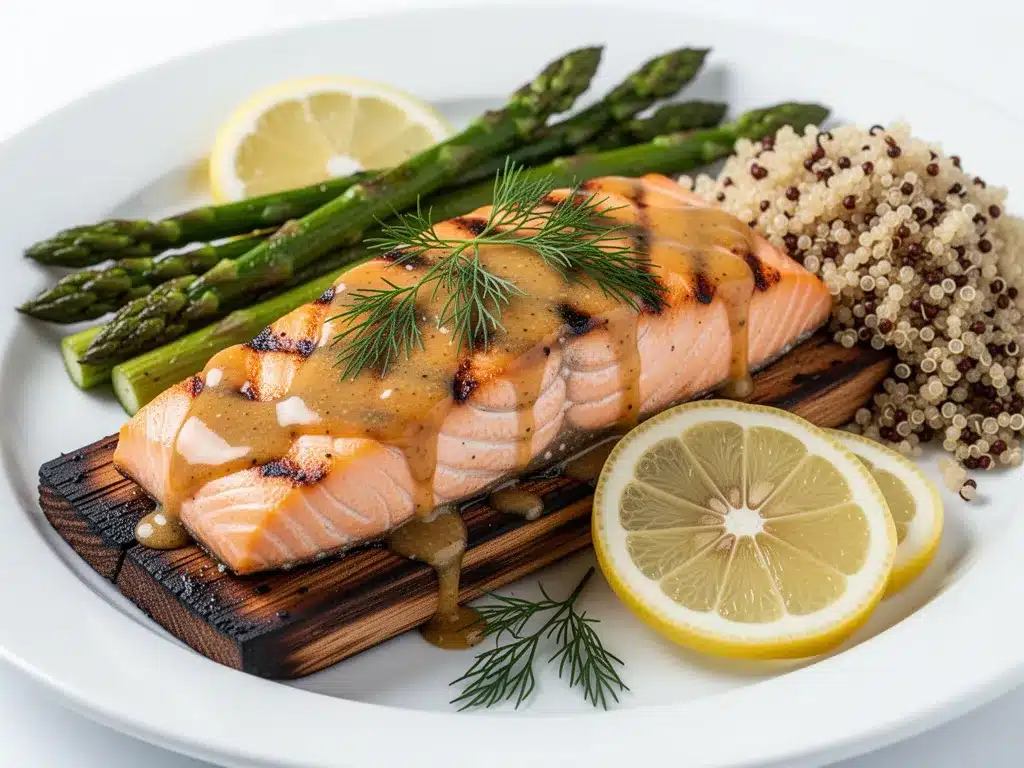
Maple Syrup (¼ cup / 60ml) — Use real maple syrup, not “pancake syrup” made with corn syrup. The label should say 100% pure maple syrup. It adds a rich, complex sweetness that artificial syrup just can’t match. Grade A Dark Amber is my favorite because it has a stronger flavor.
Dijon Mustard (2 tablespoons) — This is non-negotiable. Dijon has that sharp, tangy kick that cuts through the sweetness of the maple and the richness of the fish. Whole grain mustard works too, but Dijon blends smoother. Avoid yellow mustard—it’s too vinegary and will throw off the balance.
Soy Sauce (1 tablespoon) — Adds umami and depth. It’s what makes the glaze taste savory rather than just sweet. If you’re watching sodium, use low-sodium soy sauce. Tamari is a great gluten-free alternative.
Lemon Juice (1 tablespoon) — Freshly squeezed only. Bottled juice has a weird chemical taste that doesn’t belong here. The acid brightens up the heavy flavors and keeps the salmon from tasting too rich.
Minced Garlic (2 cloves) — Fresh garlic is best. If you’re in a rush, jarred minced garlic works, but fresh tastes brighter. Don’t skip it—it adds a necessary aromatic punch.
Dried Dill (1 teaspoon) — Dill and salmon are a classic pairing. Dried dill is convenient and holds up well to heat. If you have fresh dill, use a tablespoon of chopped fresh herbs instead. It’s even better.
Red Pepper Flakes (½ teaspoon, optional) — Just a pinch. It adds a tiny bit of heat that balances the sweet glaze. I always add it because I like a little kick, but leave it out if you’re serving kids.
For Garnish (Optional but Recommended)
Fresh Lemon Wedges — Served on the side for squeezing over the finished dish. It adds a fresh pop of acidity right before eating.
Fresh Dill Sprigs — A nice green garnish that looks professional and smells amazing.
Microgreens or Chives — If you want to make it look fancy for guests. I usually just use fresh dill because it’s simpler.
Equipment Needed
You don’t need fancy gear for this, but having the right tools makes the process smoother. Here’s what I actually use:
Grill (Gas or Charcoal) — I use a gas grill for convenience, but charcoal gives a slightly better smoky flavor. Either works fine. Just make sure it’s clean before you start.
Cedar Planks — As mentioned, buy these specifically for grilling. They come in various sizes; choose one that fits your grill grate comfortably with a little room around the edges.
Bowl for Soaking — You’ll need a large container (like a baking dish or plastic bin) to soak the planks in water. This is crucial to prevent the wood from catching fire.
Small Saucepan or Microwave-Safe Bowl — For heating the glaze ingredients so they blend smoothly. A bowl in the microwave works perfectly and saves cleanup.
Pastry Brush — For applying the glaze. Silicone brushes are great because they’re easy to clean and don’t shed bristles. Basting brushes work too, just be careful not to drip glaze on the flames.
Instant-Read Thermometer — This is the best way to ensure perfect doneness. Salmon is done at 145°F (63°C) internal temperature. If you don’t have one, you can flake it with a fork, but a thermometer takes the guesswork out.
Aluminum Foil (Optional) — Some people put foil on the plank for easier cleanup, but I don’t recommend it. It traps too much steam and can make the fish soggy. Let the plank do its job.
Tongs — For handling the plank and moving the salmon. Long-handled tongs give you better control and keep your hands safe from heat.
How to Make It: Step-by-Step
Alright, let’s get this salmon on the grill. It’s easier than you think, and I’ll walk you through exactly how I do it to avoid the smoke bombs and burnt planks.
Step 1: Soak the Plank (At least 30 minutes, up to 2 hours)
This is the most important step. If you skip this, your plank will catch fire. Place the cedar plank in a large baking dish or plastic bin and cover it completely with cold water. You can put a heavy plate on top to keep it submerged. Let it soak for at least 30 minutes, but 1-2 hours is better. The wood needs to be saturated so it smolders instead of burns. While it’s soaking, you can prep your salmon and glaze.
Step 2: Preheat Your Grill
While the plank soaks, preheat your grill to medium-high heat (about 400°F / 200°C). If you’re using a gas grill, turn all burners to high. If you’re using charcoal, arrange the coals for indirect heat—pile them on one side so you have a cool zone. You’ll cook the salmon over the indirect heat to avoid charring the outside before the inside is done.
Step 3: Prep the Salmon
Pat the salmon fillets dry with paper towels. Moisture is the enemy of a good sear, so get them as dry as possible. Season both sides lightly with salt and pepper. If you’re using skin-on fillets, make sure the skin is dry too. Set them aside on a plate.
Step 4: Make the Maple Mustard Glaze
In a small saucepan over low heat (or a microwave-safe bowl), combine the maple syrup, Dijon mustard, soy sauce, lemon juice, minced garlic, dried dill, and red pepper flakes. Whisk or stir until smooth. If using the stove, heat for 2-3 minutes just to warm it up and meld the flavors—don’t boil it. If using the microwave, heat for 30 seconds and stir. Set aside. It will thicken slightly as it cools.
Step 5: Remove Plank and Dry
Take the plank out of the water and shake off excess. Pat it dry with a towel. You don’t need it bone-dry, but remove the puddles. Place the plank directly on the hot grill grate (over indirect heat if using charcoal) or on the grill grates (if using gas, place it over the burners that are off if you have a side burner, or just over medium heat if you’re okay with a bit more smoke).
Step 6: Grill the Salmon
Brush the surface of the hot plank with a little oil (olive or vegetable) to prevent sticking. Place the salmon fillets on the plank, skin-side down if skin-on. Close the grill lid. Cook for 12-15 minutes, depending on the thickness of the fillets. Do not flip the salmon. The plank steams it from below, so flipping is unnecessary and might break the fish.
At the 10-minute mark, open the lid and brush the top of the salmon generously with the maple mustard glaze. Close the lid and continue cooking for another 2-5 minutes. The salmon is done when it flakes easily with a fork and reaches an internal temperature of 145°F (63°C). The glaze will caramelize and bubble slightly.
Step 7: Rest and Serve
Using oven mitts or thick gloves, carefully remove the plank from the grill (it will be hot and may still be smoking). Place it on a heat-safe cutting board or platter. Let the salmon rest for 2-3 minutes. This allows the juices to redistribute. Garnish with fresh lemon wedges and extra dill. Serve immediately with the plank as a rustic presentation.
Expert Tips & Tricks
After making this dozens of times, here’s what I’ve learned to ensure your Cedar Plank Grilled Salmon with Maple Mustard Glaze turns out perfectly every time.
Don’t Skimp on Soaking Time — I know you’re excited to eat, but if you only soak the plank for 10 minutes, it will likely catch fire. 30 minutes is the absolute minimum. If you’re making it ahead, soak it in the morning and grill in the evening. The longer it soaks, the less smoke it produces.
Use Indirect Heat — If you put the plank directly over high flames, the outside of the salmon will burn before the inside is cooked. On a gas grill, this means turning off the burner under the plank if possible, or using a lower setting. On charcoal, pile the coals to one side and cook over the empty side. The plank will still get hot enough to cook the fish without charring.
Glaze at the End — Maple syrup burns easily. If you brush the glaze on at the beginning, it will turn black and bitter. Wait until the last 5 minutes of cooking to apply the glaze. This gives you that beautiful, sticky, caramelized finish without the char.
Check for Doneness — Salmon continues to cook after you take it off the heat. I like to pull it at 140°F (60°C) so it reaches 145°F while resting. If you wait until it’s 145°F on the grill, it might be overcooked by the time you serve it. It’s better to be slightly under than dry.
Leftover Plank? Use It Again — If the plank isn’t completely charred to ash, you can let it dry completely and store it in a bag. You can use it again for a second batch of salmon or fish. It’ll produce less smoke the second time, but it still adds flavor.
Pair with the Right Sides — This salmon is rich and flavorful, so I like to serve it with something light and crisp. Grilled asparagus, a simple arugula salad with lemon vinaigrette, or roasted new potatoes work beautifully. Avoid heavy starches like mac and cheese, which will make the meal feel too heavy.
Variations & Substitutions
Once you’ve mastered the basic recipe, here are some fun ways to mix it up. I’ve tried all of these, and they’re all winners.
Honey Soy Glaze — Swap the Dijon mustard and maple syrup for honey and soy sauce. Add a teaspoon of grated ginger for an Asian-inspired twist. This version is sweeter and less tangy.
Lemon Herb Butter — Instead of the maple glaze, brush the salmon with melted butter mixed with fresh lemon zest, parsley, and garlic. It’s lighter and more classic. Great for a spring dinner.
Spicy Sriracha Maple — Add 1 tablespoon of Sriracha or chili garlic sauce to the maple mustard glaze. It adds a nice kick that pairs well with the sweetness. Perfect if you like heat.
Teriyaki Style — Use teriyaki sauce instead of the maple mustard glaze. Add a bit of sesame oil and toasted sesame seeds as garnish. Serve with steamed rice and edamame.
Gluten-Free — This recipe is naturally gluten-free if you use tamari instead of soy sauce and check your maple syrup (most are, but some blends have additives). The cedar plank is also gluten-free. Just double-check your mustard label.
Dairy-Free — This recipe is already dairy-free! The glaze uses maple syrup and mustard, not butter. Just ensure your soy sauce/tamari is dairy-free (which it usually is).
Other Fish — You can use this method for trout, halibut, or cod. Trout works particularly well because it’s smaller and cooks faster. Adjust cooking time accordingly—thinner fillets will take 8-10 minutes.
Serving & Storage
How to Serve — I love serving this straight from the plank. It looks rustic and impressive, and guests can see exactly how it was cooked. Just make sure the plank is on a stable, heat-safe surface. I usually put a cutting board under the plank for extra stability. Serve with lemon wedges on the side so everyone can squeeze their own.
Side Dish Ideas — Grilled zucchini and bell peppers, quinoa pilaf with herbs, roasted sweet potatoes, or a simple green salad. The salmon is rich, so I like sides that are fresh and acidic.
Storage — Leftover salmon can be stored in an airtight container in the refrigerator for up to 3 days. The glaze will solidify as it cools, but that’s normal.
Reheating — The best way to reheat is gently. Place the salmon in a baking dish, cover with foil, and warm in a 275°F (135°C) oven for 10-15 minutes. You can also microwave it on low power in 30-second intervals. Avoid high heat, which will dry out the fish. The texture won’t be quite as perfect as fresh, but it’s still tasty.
Freezing — I don’t recommend freezing cooked salmon on a plank. The texture changes and becomes mushy. If you have leftover glaze, you can freeze it in an ice cube tray for future use. Thaw in the fridge and reheat gently.
Meal Prep — You can cook the salmon ahead and serve it cold or at room temperature as a salad topping. It holds up well in salads. Just keep the glaze separate until serving if you want to maintain texture.
Nutrition Information
I’m not a nutritionist, but here’s a rough breakdown if you’re tracking your intake. This is per serving (based on 4 servings, using 1.5 lbs salmon and the full glaze recipe).
| Nutrient | Amount |
|---|---|
| Calories | 380 |
| Protein | 34g |
| Carbohydrates | 12g |
| Fiber | 0g |
| Sugar | 10g |
| Fat | 22g |
| Saturated Fat | 4g |
| Cholesterol | 95mg |
| Sodium | 450mg |
What’s Good: High in protein and omega-3 fatty acids, which are great for heart and brain health. The salmon is a lean protein source.
What to Know: The sodium content comes from the soy sauce. If you’re watching salt, use low-sodium soy sauce or reduce the amount. The sugar comes from the maple syrup. If you’re cutting sugar, you can reduce the maple syrup to 2 tablespoons, though it will be less sweet.
My Take: This is a healthy, balanced meal. The fats come from the fish, which are healthy unsaturated fats. It’s not a diet food, but it’s nutrient-dense and satisfying. I don’t feel guilty eating this.
Final Thoughts
So there you have it—my go-to Cedar Plank Grilled Salmon with Maple Mustard Glaze. It’s the dish that finally made me love grilling fish. No more stress, no more burnt edges, just perfectly cooked, smoky, sweet-tangy salmon that tastes like it came from a high-end restaurant. I’ve made this for family gatherings, date nights, and just because I wanted something special on a Tuesday night. It never fails to impress.
The beauty of this method is how forgiving it is. Even if you’re a beginner cook, the plank protects the fish from drying out. And the glaze is so easy to throw together that you’ll want to make it for other proteins too. Try it on chicken or pork chops next time!
If you make this, I’d love to hear how it turns out. Drop a comment below with your results, or tag me on social media if you post a photo. I love seeing your kitchen creations. And if you have questions, ask away—I’m here to help. Happy grilling, and enjoy every bite!
Frequently Asked Questions
Can I use a different type of wood plank?
You can, but cedar is traditional for a reason. It has a pleasant, mild flavor that complements fish. Other options include alder (also great for fish), cherry (sweeter), or oak (stronger flavor). Just make sure it’s labeled safe for grilling. Never use pressure-treated wood or any wood from a hardware store that isn’t meant for cooking.
Do I have to soak the plank for 2 hours?
The minimum is 30 minutes, but I strongly recommend 1-2 hours. If the plank isn’t fully saturated, it will smoke excessively and might catch fire. If you’re short on time, you can boil the plank for 10 minutes instead of soaking, but soaking is easier and less risky.
Why is my salmon sticking to the plank?
This usually happens if the plank wasn’t soaked long enough or if you didn’t oil it. Always brush the plank with oil before adding the fish. Also, don’t try to move the salmon while it’s cooking. Let it cook undisturbed for the full time, and it will release naturally when it’s done.
Can I use this method for salmon fillets with skin on?
Yes! In fact, I prefer skin-on because the skin helps hold the fillet together on the plank. The skin will get crispy and delicious. You can peel it off easily after cooking if you prefer, but many people enjoy eating the skin.
What if I don’t have a grill?
You can adapt this for the oven. Place the soaked plank on a baking sheet and bake at 400°F (200°C) for 15-20 minutes. The results won’t be as smoky, but the fish will still be moist and flavorful. The glaze will caramelize nicely in the oven too.
Can I make the glaze ahead of time?
Absolutely. Mix all the glaze ingredients in a jar and store it in the fridge for up to 1 week. It will thicken in the fridge, so just let it come to room temperature and stir it before brushing it on. It actually tastes better after the flavors have melded overnight.
Is cedar plank salmon safe to eat?
Yes, the wood itself is not eaten. You’re just infusing the fish with the aroma. The plank might char a bit, but that’s normal. Just make sure you buy planks labeled for grilling, as they are treated to burn safely and slowly. Avoid any wood that smells like chemicals or paint.
Pin This Recipe!
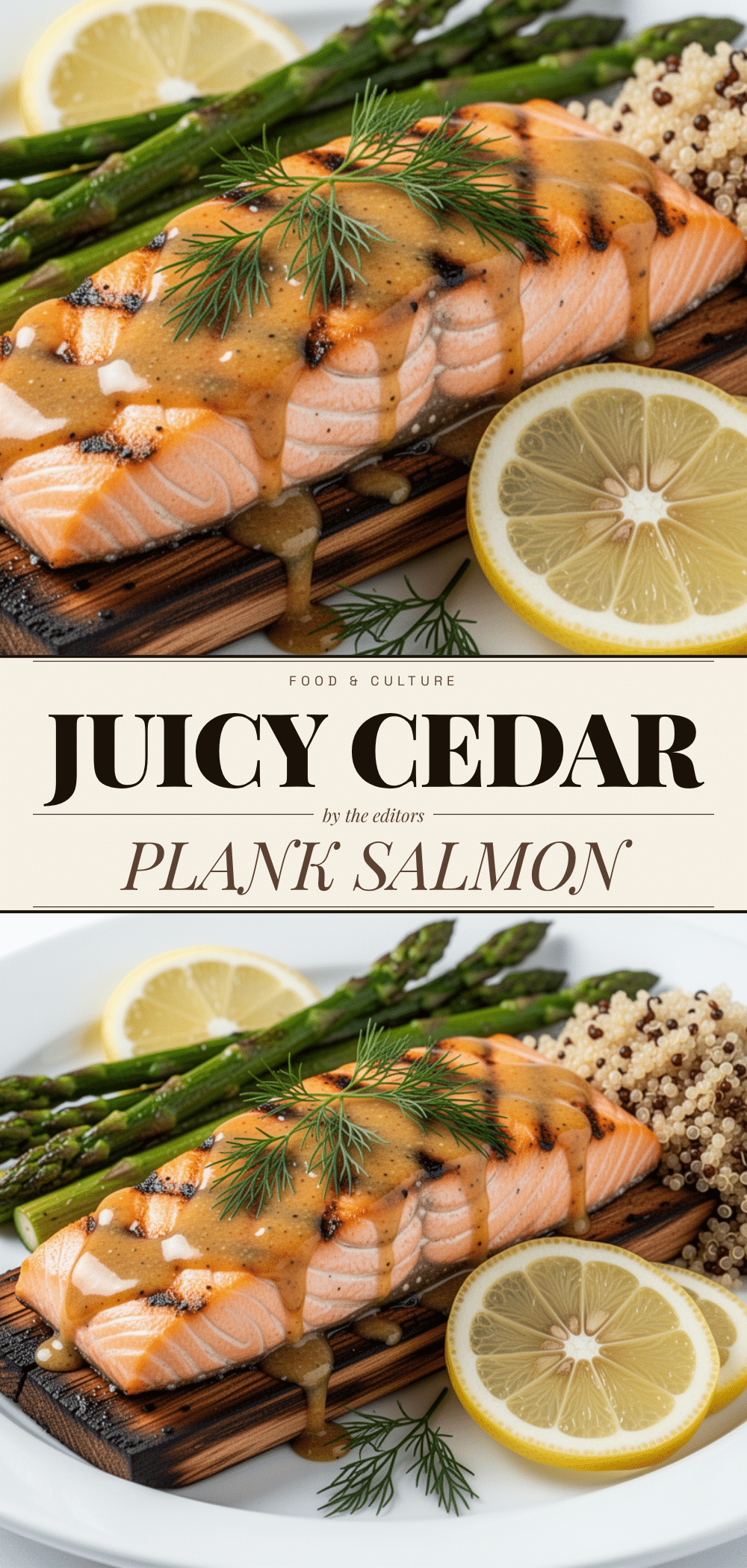
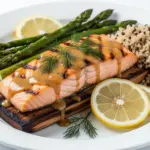
Cedar Plank Grilled Salmon with Maple Mustard Glaze
- Total Time: 30 minutes
- Yield: 4 servings 1x
Description
This cedar plank grilled salmon features a sweet and tangy maple mustard glaze. The plank steams the fish in its own juices, ensuring it stays moist and infuses it with a smoky cedar aroma without sticking to the grill.
Ingredients
- 1–2 Cedar Planks (Western Red Cedar, labeled safe for grilling)
- 1.5 lbs Salmon Fillets (center-cut, skin-on or skin-off)
- Kosher Salt (to taste)
- Freshly Cracked Black Pepper (to taste)
- 1/4 cup Pure Maple Syrup (Grade A Dark Amber)
- 2 tablespoons Dijon Mustard
- 1 tablespoon Soy Sauce (or Tamari for gluten-free)
- 1 tablespoon Fresh Lemon Juice
- 2 cloves Garlic, minced
- 1 teaspoon Dried Dill (or 1 tablespoon fresh chopped dill)
- 1/2 teaspoon Red Pepper Flakes (optional)
- Olive or Vegetable Oil (for brushing plank)
- Fresh Lemon Wedges (for garnish)
- Fresh Dill Sprigs (for garnish)
Instructions
- Soak the cedar planks in a large container of cold water for at least 30 minutes (up to 2 hours) to prevent burning.
- Preheat your grill to medium-high heat (approx. 400°F / 200°C). For charcoal grills, arrange coals for indirect heat.
- Pat salmon fillets dry with paper towels and season both sides lightly with salt and pepper.
- In a small saucepan over low heat or a microwave-safe bowl, combine maple syrup, Dijon mustard, soy sauce, lemon juice, minced garlic, dried dill, and red pepper flakes. Whisk until smooth and warm slightly (do not boil).
- Remove planks from water, shake off excess, and pat dry. Place planks on the hot grill grate over indirect heat.
- Brush the surface of the hot plank with a little oil.
- Place salmon fillets on the plank, skin-side down if skin-on. Close the grill lid and cook for 12-15 minutes without flipping.
- At the 10-minute mark, brush the top of the salmon generously with the maple mustard glaze. Continue cooking for another 2-5 minutes until salmon flakes easily and reaches an internal temperature of 145°F (63°C).
- Remove plank from grill using oven mitts and place on a heat-safe surface. Let salmon rest for 2-3 minutes.
- Garnish with fresh lemon wedges and dill. Serve immediately.
Notes
[‘Do not skip soaking the plank; it prevents the wood from catching fire.’, ‘Use indirect heat to avoid charring the outside before the inside is cooked.’, ‘Apply the glaze in the last 5 minutes of cooking to prevent the maple syrup from burning.’, ‘Salmon continues to cook after removal; pull at 140°F for a final temp of 145°F.’, ‘Leftover planks can be dried and reused if not charred to ash.’]
- Prep Time: 15 minutes
- Cook Time: 15 minutes
- Category: Main Course
- Cuisine: American
Nutrition
- Serving Size: 1 fillet per serving
- Calories: 380
- Sugar: 10
- Sodium: 450
- Fat: 22
- Saturated Fat: 4
- Carbohydrates: 12
- Protein: 34
Keywords: cedar plank salmon, grilled salmon, maple mustard glaze, summer dinner, healthy seafood, gluten-free options, dairy-free