I have a confession to make. Last Thursday, I was exhausted. You know that specific kind of tired where your brain feels like static and the only thing sounding right in your head is “pizza” or “burger”? I stood in my kitchen, staring at a raw salmon fillet and a carton of cream, feeling like my culinary skills had hit a brick wall. I didn’t want to cook. But I also didn’t want to order $25 worth of food that would arrive cold and soggy.
So, I threw everything into one pan. Just tossed the salmon, some spinach, a handful of sun-dried tomatoes (the ones packed in oil, because life is too short for dry ones), and enough garlic to wake the neighbors. I figured I’d have a decent dinner. What I got was something that made my partner stop mid-scroll and ask, “Wait, did you order from that Italian place? Because this is restaurant quality.”
That was the moment I knew I had found the holy grail of weeknight dinners. This creamy Tuscan salmon pasta isn’t just a recipe; it’s a lifesaver. It’s the dish I make when I need to impress without spending three hours in the kitchen. It’s the meal that convinces my picky eater to actually eat his vegetables (the spinach disappears so fast, it’s a miracle). And honestly? It’s become so reliable that I’ve made it at least six times in the last month. I’m not even embarrassed about the repetition anymore. If anything, I’m proud of the consistency.
There’s something magical about how the sun-dried tomatoes caramelize in the cream sauce, creating this sweet-tangy depth that cuts through the richness of the salmon and the pasta. It’s rustic, it’s elegant, and it’s incredibly forgiving. You don’t need to be a chef to pull this off. You just need a big skillet, some patience, and the willingness to trust that your kitchen smells amazing.
Over the last few months, I’ve tweaked the ratios, tested different pastas, and even debated whether to sear the salmon first or cook it in the sauce. (Spoiler: searing is non-negotiable for texture.) I’ve refined this one-pan creamy Tuscan salmon pasta recipe until it’s foolproof. Whether you’re feeding a family of four or just yourself and trying to eat a little healthier, this dish delivers. It’s rich, it’s flavorful, and it’s ready in under 30 minutes. Let me walk you through exactly how to make it so you can add it to your rotation for good.
Why You’ll Love This Creamy Tuscan Salmon Pasta
Look, there are a million pasta recipes out there. So why this one? Why should you stop scrolling and start chopping? Here’s the real talk on why this creamy Tuscan salmon pasta has earned its spot in my weekly meal plan.
- It’s actually fast. I’m not talking “set a timer for 45 minutes” fast. I’m talking 25 minutes from fridge to fork. The salmon cooks in the same pan as the sauce, meaning minimal cleanup. This is huge for me on weeknights when I’m running on fumes.
- The flavor profile is complex but simple. You get the sweetness of sun-dried tomatoes, the earthiness of spinach, the savory punch of garlic, and the richness of cream. It tastes like you spent hours simmering, but you’re just chilling on the couch while the pasta boils. It’s a win-win.
- It’s protein-packed. Salmon isn’t just delicious; it’s one of the healthiest fish you can eat. Omega-3s, high-quality protein, and healthy fats. Pair that with whole wheat pasta (or regular, I don’t judge), and you’ve got a meal that keeps you full and satisfied. No 3pm slump here.
- It’s incredibly versatile. Hate sun-dried tomatoes? Use roasted red peppers. Don’t like salmon? Swap it for chicken thighs or shrimp. This recipe is a framework, not a rigid rulebook. I’ve made it with shrimp (delicious), with chicken (classic), and even with just the sauce over zucchini noodles for a low-carb version. It adapts to whatever you have in your fridge.
- It’s a crowd-pleaser. I’ve served this to foodie friends who critique everything, and to my dad who thinks “healthy” means “boiled chicken.” Everyone loved it. The creamy sauce masks any fishy tastes the salmon might have, and the sun-dried tomatoes add a gourmet touch that makes people ask for the recipe.
Bottom line? This is the dinner that makes you feel like a genius. It’s easy, it’s delicious, and it’s healthy-ish. What more could you want?
Ingredients You’ll Need for the Best Creamy Tuscan Salmon Pasta
One of the best things about this creamy Tuscan salmon pasta is how few ingredients you need. Most of them are pantry staples or easy finds at any grocery store. I’m particular about a few things here, so let’s break down what you need and why it matters.
For the Protein
Salmon fillets (1.5 lbs / 680g) — Look for wild-caught if you can afford it. It has a firmer texture and better flavor than farmed. I prefer center-cut fillets because they’re uniform in thickness, which helps them cook evenly. If salmon is too pricey or you’re buying on a whim, cod or halibut work too, though they’ll cook faster.
Seasoning (Salt, black pepper, and Italian seasoning) — Keep it simple. The salmon just needs a good seasoning before it hits the pan. I use a mix of salt, pepper, and a sprinkle of dried Italian herbs. It adds depth without overpowering the fish.
For the Sauce
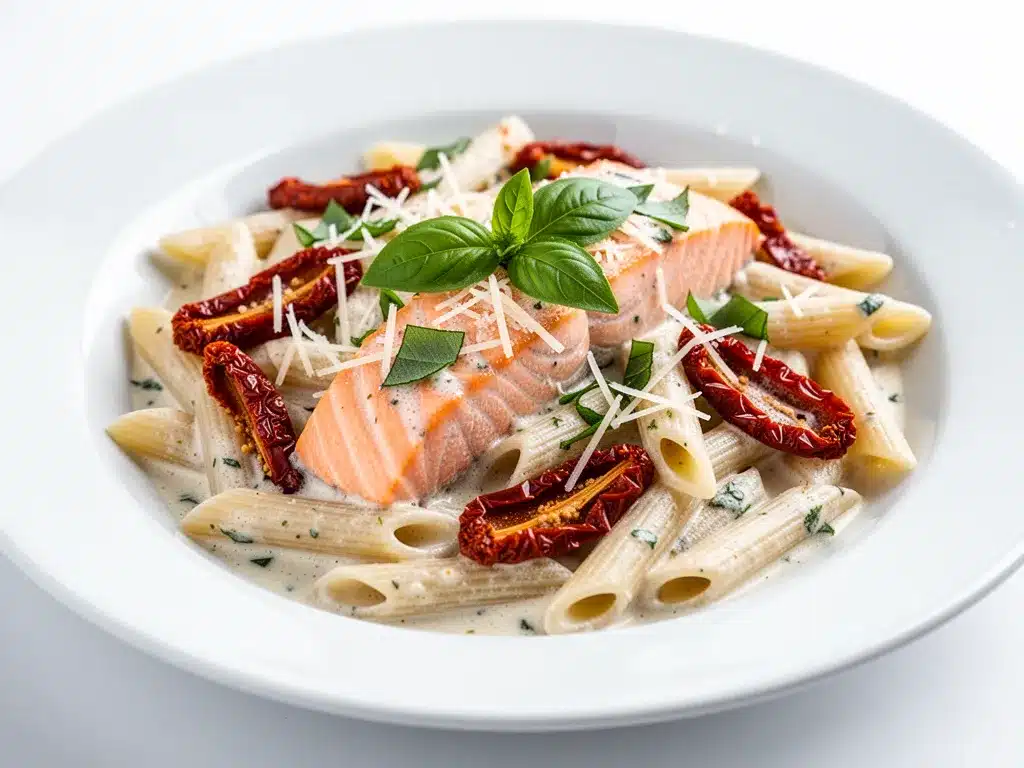
Sun-dried tomatoes (1 cup / 120g) — These are the star. Buy the ones packed in olive oil, not the dry kind. The oil from the jar is liquid gold—use it in your sauce! Chop them roughly; you want little bursts of flavor in every bite.
Heavy cream (1.5 cups / 360ml) — This is what makes the sauce rich and luxurious. Don’t skimp with half-and-half unless you’re okay with a thinner, less creamy sauce. I’ve tried it, and while it’s lighter, it’s not the same. If you want a lighter option, coconut cream works, but the flavor profile changes slightly.
Garlic (4 cloves, minced) — Yes, four cloves. Garlic is the backbone of this sauce. Fresh only. If you use jarred garlic, the sauce will taste metallic and flat. Mince it yourself—it takes two minutes.
Chicken broth (½ cup / 120ml) — I use low-sodium broth so I can control the saltiness. Vegetable broth works for a vegetarian version. This adds body to the sauce so it’s not just pure cream.
Spinach (4 cups / 120g fresh) — Fresh baby spinach wilts down to nothing. Don’t be scared by the volume. It adds color, nutrients, and a slight bitterness that balances the cream.
Parmesan cheese (½ cup / 50g, grated) — Freshly grated from a block. Pre-grated cheese has anti-caking agents that prevent it from melting smoothly, leading to a grainy sauce. Worth the extra minute.
For the Pasta
Penne or Rigatoni (1 pound / 450g) — I love tube-shaped pastas because the sauce gets trapped inside. Fusilli works too. Avoid spaghetti; it doesn’t hold the chunky sauce as well. Salt your pasta water heavily—it should taste like the sea.
Butter (2 tablespoons) — For searing the salmon and adding richness to the sauce. Unsalted butter lets you control the salt level.
Olive oil (1 tablespoon) — For sautéing the aromatics. Use extra virgin if it’s high quality.
Equipment Needed
You don’t need a fancy kitchen to make this creamy Tuscan salmon pasta. Here’s what I actually use:
- Large skillet or Dutch oven (12-inch) — This is crucial. You need enough space to sear the salmon and then cook the sauce without crowding. If your pan is too small, the salmon steams instead of searing. I use a stainless steel skillet because it gives a nice crust, but cast iron works too.
- Pasta pot — A large pot for boiling the pasta. Any big pot will do.
- Sharp knife — For chopping the sun-dried tomatoes and mincing garlic. A dull knife is a dangerous knife.
- Wooden spoon — For stirring the sauce. Silicone works too.
- Colander — For draining the pasta.
- Measuring cups and spoons — Basic stuff.
That’s it. No fancy gadgets, no stand mixer. Just good old-fashioned cooking tools.
How to Make It: Step-by-Step
Alright, let’s get cooking. I’m walking you through exactly how I make this one-pan creamy Tuscan salmon pasta. It’s simple, but there are a few tricks to ensure it turns out perfectly.
Step 1: Prep Your Ingredients
Before you turn on the stove, get everything ready. Chop the sun-dried tomatoes, mince the garlic, and measure out the cream and broth. Season your salmon fillets with salt, pepper, and Italian seasoning. This is called mise en place, and it makes the cooking process stress-free. Once you start cooking, things move fast.
Step 2: Boil the Pasta
Bring a large pot of salted water to a rolling boil. Add the pasta and cook according to package directions until al dente. Important: Reserve 1 cup of pasta water before draining. This starchy water is magic for thinning the sauce and helping it cling to the pasta. Drain the pasta and set aside.
Step 3: Sear the Salmon
While the pasta cooks, heat the butter and olive oil in your large skillet over medium-high heat. Once the butter is foaming, add the salmon fillets. Sear for 3-4 minutes on one side until golden brown. Flip and cook for another 2-3 minutes. The salmon should be cooked through but still moist. Remove the salmon from the pan and set it aside on a plate. Don’t clean the pan—those brown bits (fond) are flavor.
Step 4: Build the Sauce
Reduce the heat to medium. Add the minced garlic to the same skillet and sauté for 30 seconds until fragrant. Be careful not to burn it. Add the chopped sun-dried tomatoes and cook for 1 minute. Pour in the chicken broth and let it simmer for 2 minutes to deglaze the pan, scraping up any brown bits. Stir in the heavy cream and let it simmer for 3-4 minutes until it thickens slightly. The sauce should coat the back of a spoon.
Step 5: Add the Greens and Cheese
Toss in the fresh spinach and stir until it wilts, about 1-2 minutes. Remove the skillet from the heat. Stir in the grated Parmesan cheese until it’s melted and smooth. If the sauce is too thick, add a splash of the reserved pasta water. Taste and adjust seasoning with salt and pepper.
Step 6: Combine and Serve
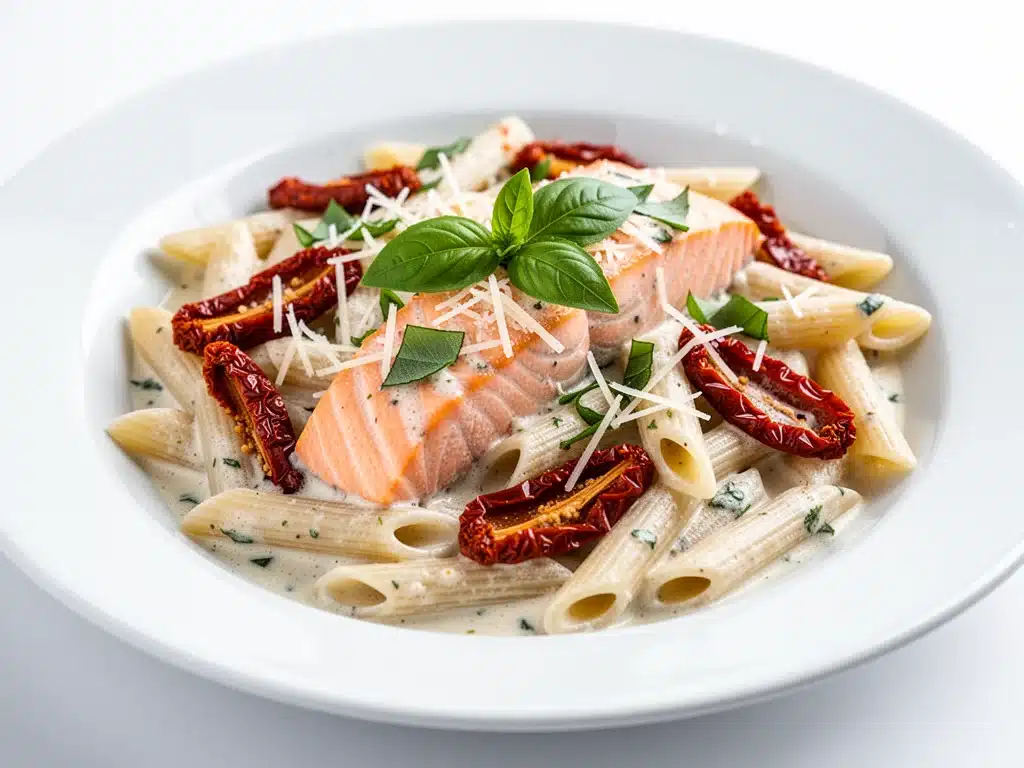
Add the drained pasta to the skillet. Toss everything together until the pasta is coated in the creamy sauce. Flake the cooked salmon into large chunks and gently fold it into the pasta. Serve immediately with extra Parmesan, fresh basil, and a crack of black pepper. Drizzle with a little olive oil if you want extra richness.
Expert Tips & Tricks
Here’s everything I’ve learned from making this dish dozens of times. These tips will save you from my mistakes.
- Don’t Overcook the Salmon. Salmon continues to cook even after you remove it from the pan due to residual heat. Pull it off when it’s just barely cooked through in the center. It will be perfect when you fold it into the pasta later.
- Use the Sun-Dried Tomato Oil. Don’t pour out the oil from the jar! Add a spoonful of it to your skillet when sautéing the garlic. It adds an intense tomato flavor that you can’t get any other way.
- Reserve That Pasta Water. I can’t stress this enough. The starchy water is what binds the sauce to the pasta. Without it, you’ll have creamy sauce on the side of your plate, not on the noodles.
- Low Heat for Cheese. Always remove the pan from the heat before adding the Parmesan. High heat can cause the cheese to clump or separate. Gentle heat ensures a smooth, creamy sauce.
- Toast the Spices. If you’re using dried herbs like oregano or basil, toast them in the oil for 10 seconds before adding the liquid. It wakes up their flavor.
Common Mistakes to Avoid
Sauce is too watery: Let the cream simmer longer. Also, make sure you’re not adding too much pasta water at the end.
Sauce is too thick: Add more pasta water, a tablespoon at a time, until it reaches your desired consistency.
Salmon is dry: You likely overcooked it. Next time, pull it off the heat a minute earlier.
Variations & Substitutions
Once you’ve mastered the basic version, here’s how you can mix it up. I’ve tried all of these, and they all work.
- Shrimp Version: Swap salmon for 1lb of large shrimp. Cook them for 2-3 minutes per side. They cook faster than salmon, so watch closely.
- Chicken Version: Use chicken thighs or breasts. Season with the same herbs. Chicken takes longer to cook, so sear it first and remove, then make the sauce, and return the chicken at the end.
- Vegan Version: Use olive oil instead of butter, coconut cream instead of heavy cream, and nutritional yeast instead of Parmesan. Add chickpeas for protein. It’s different but still tasty.
- Gluten-Free: Use gluten-free pasta. Everything else is naturally gluten-free.
- Lighter Version: Use half-and-half instead of heavy cream and reduce the Parmesan. It’s thinner but still good.
Serving & Storage
How to Serve
I usually serve this straight from the skillet. It looks rustic and stays warm. Pair it with a simple green salad with balsamic vinaigrette and some garlic bread. If you want to get fancy, add a side of roasted asparagus.
Storage
Store leftovers in an airtight container in the fridge for up to 3 days. The sauce will thicken in the fridge—totally normal. To reheat, add a splash of milk or cream to a skillet and warm gently over low heat. Stir frequently. Avoid the microwave if you can; it tends to dry out the salmon.
Freezing
I don’t recommend freezing this dish. The dairy in the sauce can separate when thawed, and the salmon texture changes. It’s best eaten fresh.
Nutrition Information
I’m not a nutritionist, but here’s the breakdown per serving (based on 4 servings):
- Calories: 650
- Protein: 35g
- Carbs: 60g
- Fat: 28g
- Fiber: 3g
- Sugar: 4g
This is a hearty meal. The salmon provides healthy fats and protein, while the pasta provides energy. If you’re watching calories, use less cream or more veggies. But honestly? This is comfort food. Enjoy it.
Final Thoughts
So that’s my go-to creamy Tuscan salmon pasta! I’ve probably talked your ear off, but when you find a recipe that works this well, you have a lot to say about it. This dish has saved me on countless busy nights. It’s my answer to “what’s for dinner?” when I’m tired but still want something delicious and nourishing. My family loves it, my friends ask for it, and I’m making it again tonight.
Make it yours! Try different add-ins, swap in your favorite veggies, or adjust the spice level. The best recipes are the ones you adapt. If you make this, drop a comment and let me know how it turned out. I love hearing your stories. And if something doesn’t work, tell me—I’m here to help.
Happy cooking! I hope your kitchen smells half as good as mine does right now.
Frequently Asked Questions
Can I use frozen salmon?
Yes, but you need to thaw it completely first. Pat it dry with paper towels before seasoning. Frozen salmon can release more water, so make sure you sear it well to get that crust.
Why did my sauce separate?
This usually happens if the heat was too high when you added the cheese or cream. Always keep the heat low when making the sauce, and remove the pan from the burner before adding cheese. If it’s already separated, try whisking in a splash of cold cream to bring it back together.
Can I make this ahead of time?
You can make the sauce ahead and store it in the fridge. Cook the pasta fresh when you’re ready to eat. Reheat the sauce gently and toss with the hot pasta. The salmon is best cooked fresh, but you can cook it ahead and reheat gently.
What type of pasta is best?
I love penne or rigatoni because the sauce gets inside the tubes. Fusilli and rotini also work well. Avoid long pastas like spaghetti, as they don’t hold the chunky sauce as well.
Can I use light cream?
You can, but the sauce will be thinner and less rich. If you use light cream, you might need to simmer it longer to reduce and thicken. I prefer heavy cream for the best texture, but light cream works in a pinch.
How do I know when the salmon is done?
The salmon is done when it flakes easily with a fork and is opaque throughout. The internal temperature should reach 145°F (63°C). But for best texture, pull it off at 140°F (60°C) as it will continue to cook.
Pin This Recipe!
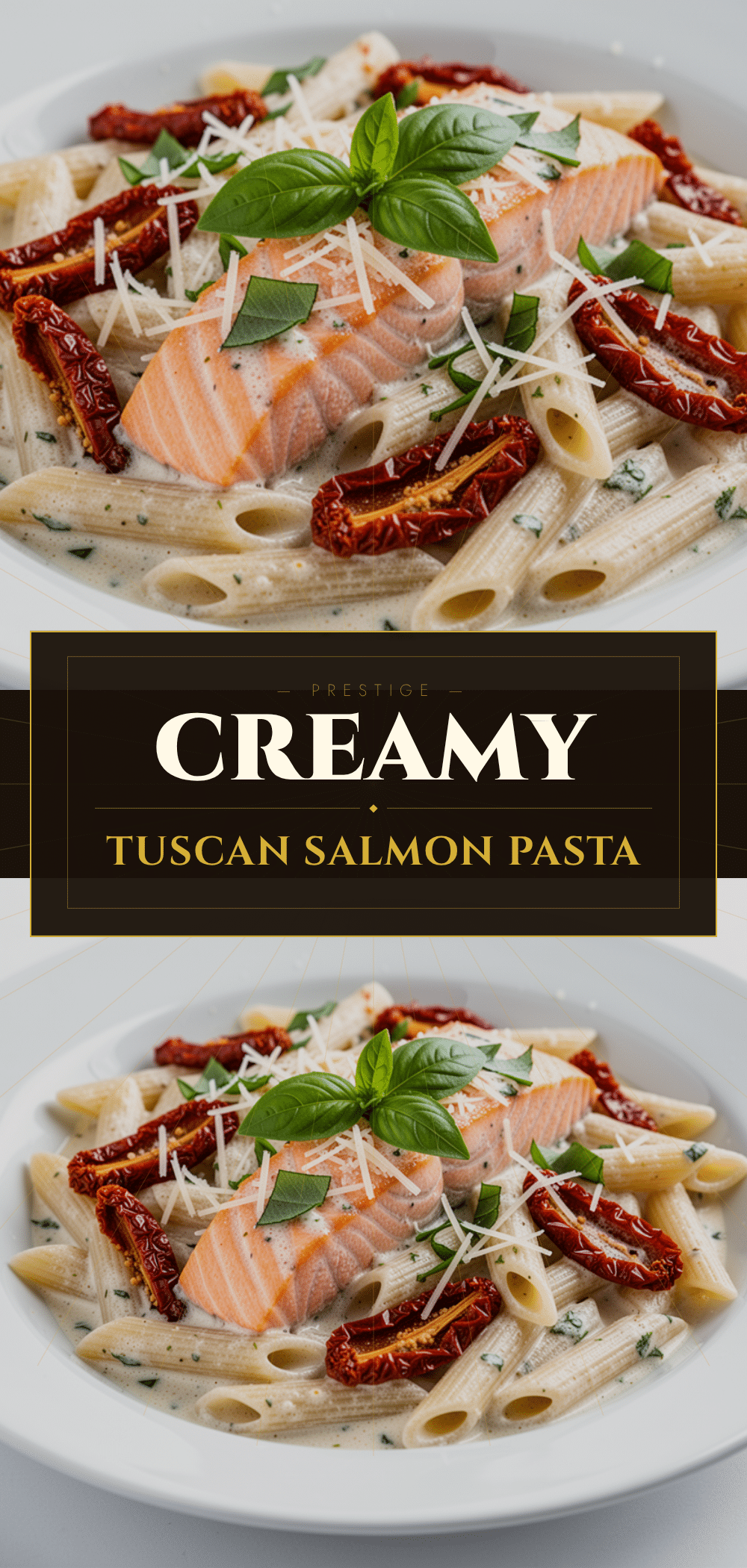
Creamy Tuscan Salmon Pasta: Easy One-Pan Recipe
- Total Time: 30 minutes
- Yield: 4 servings 1x
Description
A quick, one-pan weeknight dinner featuring seared salmon in a rich, creamy sauce with sun-dried tomatoes, spinach, and garlic served over pasta.
Ingredients
- 1.5 lbs salmon fillets
- Salt and black pepper
- Italian seasoning
- 1 cup sun-dried tomatoes (packed in oil)
- 1.5 cups heavy cream
- 4 cloves garlic, minced
- ½ cup chicken broth (low-sodium)
- 4 cups fresh baby spinach
- ½ cup Parmesan cheese, grated
- 1 pound penne or rigatoni
- 2 tablespoons butter
- 1 tablespoon olive oil
Instructions
- Bring a large pot of salted water to a rolling boil. Cook pasta according to package directions until al dente. Reserve 1 cup of pasta water before draining, then set pasta aside.
- While pasta cooks, heat butter and olive oil in a large skillet over medium-high heat. Season salmon fillets with salt, pepper, and Italian seasoning.
- Sear salmon in the skillet for 3-4 minutes on one side until golden brown. Flip and cook for another 2-3 minutes until cooked through but moist. Remove salmon from pan and set aside on a plate.
- Reduce heat to medium. Add minced garlic to the same skillet and sauté for 30 seconds until fragrant. Add chopped sun-dried tomatoes and cook for 1 minute.
- Pour in chicken broth and simmer for 2 minutes to deglaze the pan, scraping up brown bits. Stir in heavy cream and simmer for 3-4 minutes until slightly thickened.
- Toss in fresh spinach and stir until wilted (1-2 minutes). Remove skillet from heat.
- Stir in grated Parmesan cheese until melted and smooth. If sauce is too thick, add a splash of reserved pasta water. Taste and adjust seasoning.
- Add drained pasta to the skillet and toss to coat in the sauce. Flake salmon into large chunks and gently fold into the pasta.
- Serve immediately with extra Parmesan, fresh basil, and black pepper.
Notes
Do not overcook the salmon; it continues to cook after removal from heat. Use the oil from the sun-dried tomato jar for extra flavor. Always remove the pan from heat before adding cheese to prevent clumping. Reserve pasta water to help the sauce cling to the noodles.
- Prep Time: 10 minutes
- Cook Time: 20 minutes
- Category: Main Course
- Cuisine: Italian
Nutrition
- Serving Size: 1 plate with salmon
- Calories: 650
- Sugar: 4
- Sodium: 800
- Fat: 28
- Saturated Fat: 12
- Carbohydrates: 60
- Fiber: 3
- Protein: 35
Keywords: Tuscan salmon pasta, creamy salmon recipe, one-pan dinner, weeknight meals, easy pasta recipes, healthy salmon dinner